Tanzania Migration Season: Ultimate Guide and Expert Tips
We invite you to witness one of nature’s most profound manifestations, where ancient rhythms pulse through golden plains in an eternal dance of survival. This is not merely wildlife movement—it is the heartbeat of the Serengeti itself.
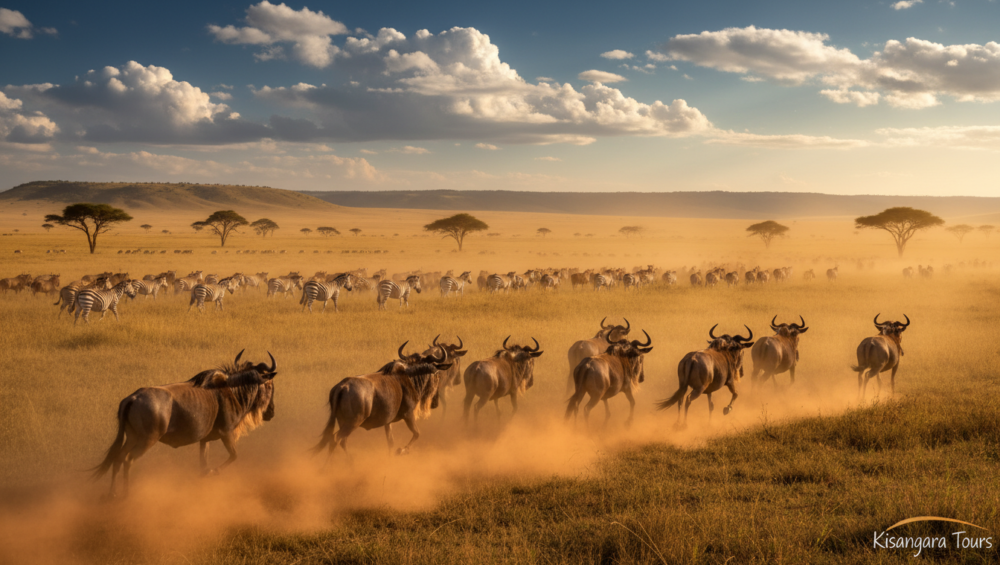
The great migration unfolds as a circular symphony across our beloved homeland. Nearly two million wildebeest, zebra, and gazelle trace an 800-kilometer path written in the language of rain and instinct. Each year brings subtle variations to this timeless spectacle, yet the fundamental truth remains unchanged.
Born from decades of intimate knowledge, this guide transforms ordinary travelers into witnesses of wonder. We stand ready as your companions in discovery at +255 755 002 886, +255 783 292 929 or info@kisangaratours.com. Let us reveal the soul of Tanzania through the greatest wildlife spectacle on earth.
Key Takeaways
- The Great Migration involves approximately 2 million animals moving in a continuous 800-kilometer cycle
- This represents the largest mammal movement on our planet
- The journey follows rainfall patterns and the greening of nutritious grasses
- Wildebeest, zebra, and various gazelle species participate in this annual event
- Timing your visit correctly is essential for witnessing key moments
- Local expertise dramatically enhances the safari experience
- The phenomenon occurs within the magnificent Serengeti National Park
Understanding the Great Migration
We understand this phenomenon as a living tapestry woven from instinct, rainfall, and the eternal search for sustenance. It represents nature’s most profound conversation between earth and animal.
Migration Patterns and Behaviors
The wildebeest follow an evolutionary blueprint perfected over generations. Their journey responds to seasonal rains that green the nutritious grasses.
These animals gather on short-grass plains where predators stand exposed. This offers safety during the vulnerable calving period. The herds then move northward as drought claims the southern lands.
Ecological and Historical Context
The ecological web reveals deep interconnections. Volcanic soils rich in phosphorus nourish the grasses that fuel the herds. Rainfall patterns orchestrate the timing of this grand movement.
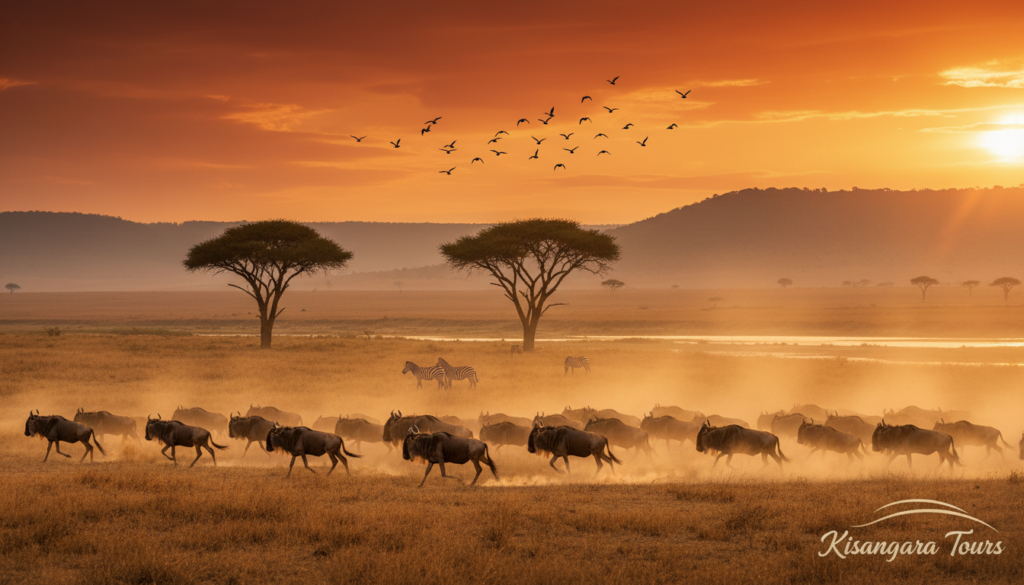
Predators follow the migration like shadows tracking light. Lions and hyenas position themselves where opportunity meets hunger. This represents one of Earth’s last intact large-mammal journeys.
| Migration Phase | Location | Key Behavior | Environmental Trigger |
|---|---|---|---|
| Calving Season | Southern Plains | Birth and protection | Wet season rains |
| Northward Journey | Western Corridor | Search for pasture | Drying plains |
| Dry Season Retreat | Northern Extension | Conservation | Scarce resources |
Key Insights on Tanzania Migration Season
This spectacle unfolds as four distinct chapters, each revealing profound truths about life’s eternal cycle in the wild. There exists no single moment to witness this phenomenon—it breathes continuously across the plains.
We emphasize a transformative understanding: every period offers unique revelations. The journey represents nature’s grand symphony, playing different movements but never falling silent.
Highlights and Seasonal Dynamics
The southern calving season brings the miracle of new life. Half a million wildebeest calves emerge within weeks, creating scenes of profound vulnerability.
River crossings showcase raw determination and peril. Ancient crocodiles await the herds’ courageous plunges into churning waters.
“To witness this movement is to understand the circle of life itself—each season writes a different verse in nature’s eternal poem.”
The best time to experience this phenomenon depends entirely on which chapter calls to your spirit. Some seek dramatic river crossings, while others prefer intimate birth scenes.
| Seasonal Phase | Primary Location | Key Wildlife Events | Visitor Experience |
|---|---|---|---|
| Calving Period | Southern Plains | Birth of 500,000 calves | Intimate wildlife moments |
| Westward Movement | Grumeti River | First major crossings | Dramatic predator action |
| Northern Journey | Mara River | Iconic river plunges | Photographic highlights |
| Return South | Central Serengeti | Grazing patterns | Contemplative viewing |
We guide travelers toward understanding that to see great migration at its most meaningful, one must align with personal intentions rather than chasing perfect timing.
Each chapter offers its own wisdom about survival and renewal in this extraordinary wildlife spectacle.
Seasonal Breakdown and Wildlife Encounters
We witness nature’s grand theater unfold across distinct chapters, each revealing profound truths about survival and renewal.
Calving Season and Predator Action
February brings a miracle of scale to the Serengeti’s short-grass plains. Half a million new lives enter the world within weeks.
The southern plains transform into a living nursery. Vulnerable newborns take their first uncertain steps as predators gather like shadows.
Lions, hyenas, and cheetahs converge on this abundance. Life and death dance in intimate proximity across the golden grasslands.
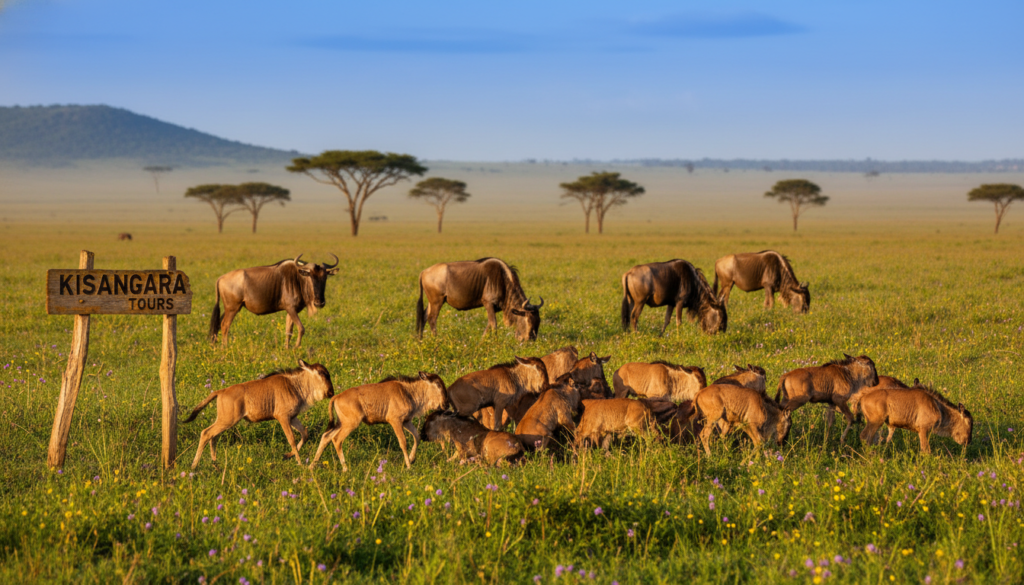
River Crossings and the Journey North
As rains diminish, the herds move north through the central plains. Thousands of wildebeest create rivers of life flowing across the savannah.
The Grumeti River presents the first major test. Crocodiles wait with prehistoric patience in the dark waters.
The Mara River crossings showcase raw courage and peril. Herds surge into churning currents where steep banks and predators await.
| Crossing Location | Timing | Key Challenges | Wildlife Dynamics |
|---|---|---|---|
| Grumeti River | June | First major aquatic obstacle | Large crocodiles, hesitant herds |
| Mara River | July-October | Steep banks, strong currents | Multiple crossings, predator concentration |
| Return South | October-November | Completed circle journey | Less crowded viewing opportunities |
Planning the Ultimate Safari Experience
The question we hear most often—’When is the best time?’—reveals a deeper truth about how we connect with wilderness. Your journey should align with the story you wish to witness, whether the tender vulnerability of new life or the raw drama of river crossings.
Best Time to Visit and Weather Considerations
January through March offers distinct magic. February transforms the southern plains into a nursery where 500,000 newborns take their first steps. The dry season months from June to October reveal wildlife clearly as vegetation recedes.
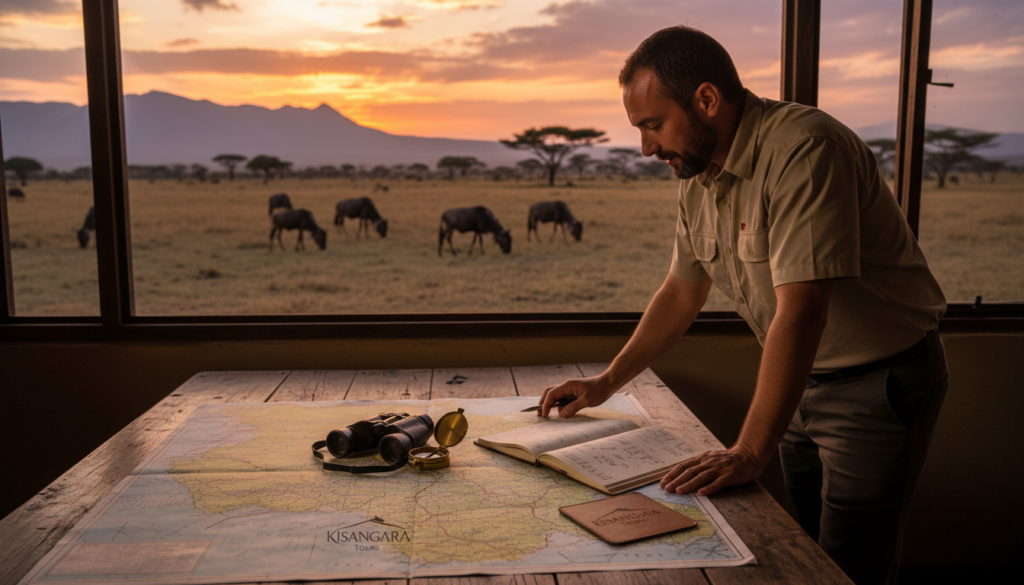
Weather patterns shape each experience differently. The long rains of April and May bring lush landscapes and fewer travelers. Brief afternoon showers during short rains rarely disrupt viewing but create spectacular skies.
Safari Itineraries and Expert Recommendations
We craft each trip as a unique conversation with the land. The best time to see dramatic crossings is July through October in the northern territories. For intimate wildlife moments, focus on the southern plains from December to May.
| Months | Location Focus | Wildlife Highlights | Travel Experience |
|---|---|---|---|
| January-March | Southern Plains | Calving season, predator action | Intimate wildlife encounters |
| June-October | Northern Serengeti | River crossings, large herds | Dramatic photographic opportunities |
| April-May, November | Various regions | Lush landscapes, reduced crowds | Value-focused contemplative journeys |
To see great migration moments that resonate with your spirit, contact us at +255 755 002 886 or +255 783 292 929. Our expertise ensures your safari captures the essence of this living spectacle.
Expert Safari Preparation and Local Tips
Your journey begins long before you set foot on African soil, in the careful crafting of an experience that honors both the wild and your soul. We approach preparation as spiritual alignment with ancient rhythms.
Accommodation Options and Safety Advice
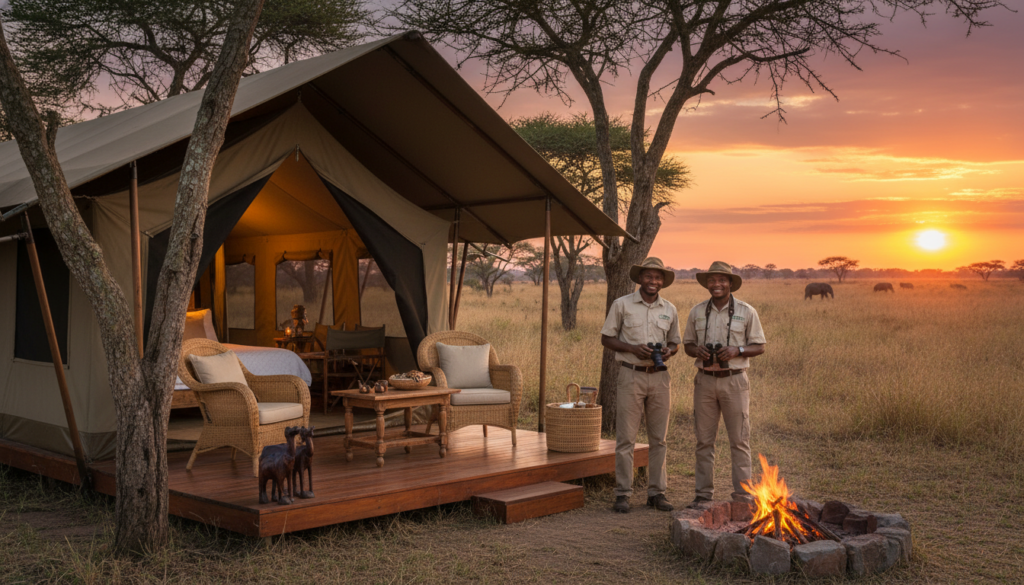
Strategic lodging placement transforms your entire safari. We position you within the heart of the action using mobile camps along the movement routes.
Safety requires respecting that wild animals follow no human schedule. Our guides possess deep ecological knowledge protecting both guests and wildlife.
Local Travel Insights and Off-the-Beaten-Path Destinations
For profound solitude, the Lobo area in October reveals spectacular viewing with thousands of wildebeest. November offers underrated destinations as prices drop.
The great migration demands flexible planning. We adjust itineraries based on current herds locations for optimal encounters.
Contact us at +255 755 002 886 or +255 783 292 929 to transform your trip into a carefully choreographed wilderness experience.
Conclusion
This living spectacle teaches us that true wilderness follows no schedule but the ancient call of rain and grass. The circle completes itself each year when the short rains summon the herds back to their ancestral grounds.
We have witnessed how this eternal rhythm transforms travelers into pilgrims. Whether you encounter the miracle of calving or the drama of river crossing, you stand before nature’s fundamental truth.
The great migration continues its journey whether human eyes witness it or not. Yet those who walk among the wildebeest carry back something precious: the memory of a world still wild, still magnificent.
As you plan your safari to Serengeti National Park, we extend our invitation. Let us guide you to witness this living circle that has shaped our homeland for millennia.
FAQ
When is the best time to see the river crossings in the northern Serengeti?
The dramatic Mara River crossings typically occur between July and October. This is when the herds move north into Kenya’s Maasai Mara, facing crocodile-infested waters in a breathtaking spectacle of survival.
Where do the wildebeest give birth to their calves?
The short grass plains of the southern Serengeti become a vast nursery from late January to February. This calving season sees thousands of calves born, attracting predators and creating a profound cycle-of-life experience.
How does the weather influence the movement of the herds?
The journey is a relentless search for fresh grazing and water, dictated entirely by the rains. The animals follow the rainfall, moving from the south after the short rains to the north as the dry season progresses.
What other wildlife can we see during a safari focused on this journey?
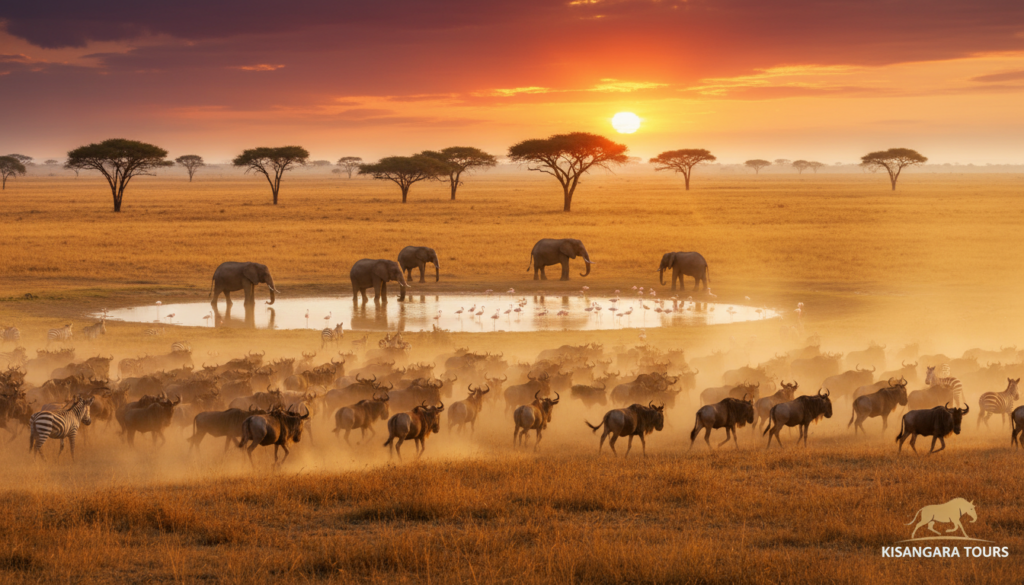
Beyond the thundering herds, you’ll witness a thriving ecosystem. Lions, cheetahs, and hyenas follow the migration, while resident wildlife like elephants and giraffes populate the plains year-round.
Are there other significant river crossings besides the Mara River?
Yes, the Grumeti River in the western corridor presents earlier, equally intense crossings around May and June. These waters also teem with massive crocodiles awaiting the herds.
What makes the calving season a special time to travel?
The southern Serengeti in February offers a unique blend of tender new life and intense predator action. It’s a quieter, yet equally dramatic, chapter of the great migration, with fewer crowds.