
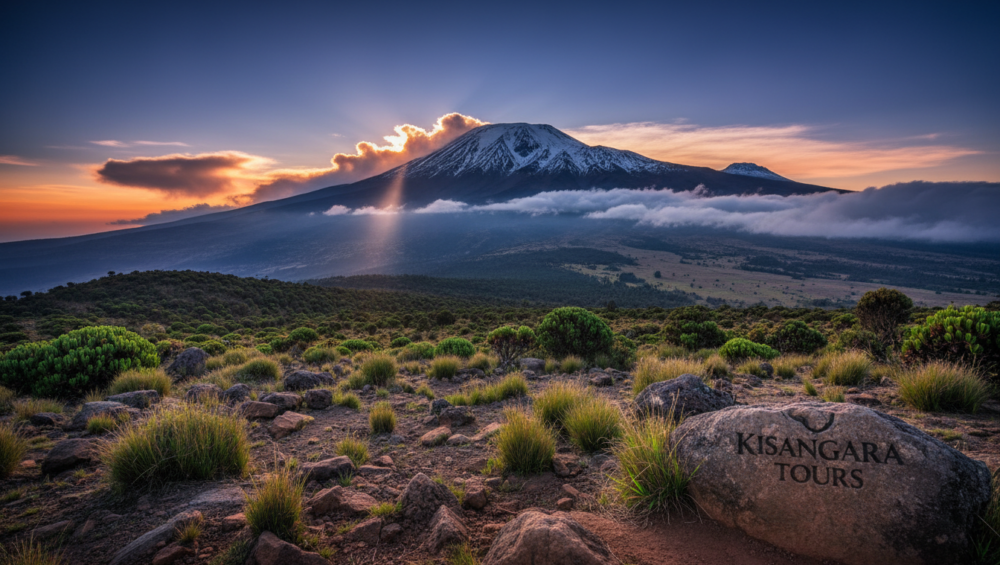
Mount Kilimanjaro Weather: Our Expert Guide for Climbers
We invite you to understand the sacred dance between earth and sky that defines this great mountain. Ancient rhythms of the equator create patterns unlike any other peak on our planet.
Your journey to Africa’s rooftop begins with a simple truth. Here, altitude whispers louder than season. The time of day paints entirely different worlds within hours.
Temperatures can swing dramatically. They range from warm at the base to a bone-chilling cold near the summit. This happens all within a single climb.
The conditions hold the key to your success. When clear skies and dry paths appear, the mountain reveals its gentler face. But when moisture and cold conspire, even the strongest spirits face formidable challenges.
Understanding these patterns transforms your expedition. It changes from a mere adventure into an informed pilgrimage. Preparation meets opportunity, and wisdom guides every ascending step.
This guide comes from our deep connection to this land we call home. We share knowledge passed through generations of guides. We have learned to read the mountain’s moods like ancient texts.
Key Takeaways
- The mountain’s equatorial location creates a unique climate without traditional seasons.
- Altitude is the primary factor influencing temperature and conditions, not the time of year.
- Dramatic temperature shifts occur within a 24-hour period during the climb.
- Favorable weather conditions are a critical component for a successful summit attempt.
- Proper preparation for rapidly changing weather is essential for safety and enjoyment.
- Local expertise provides invaluable insight into interpreting daily weather patterns.
Understanding Mount Kilimanjaro Weather Patterns
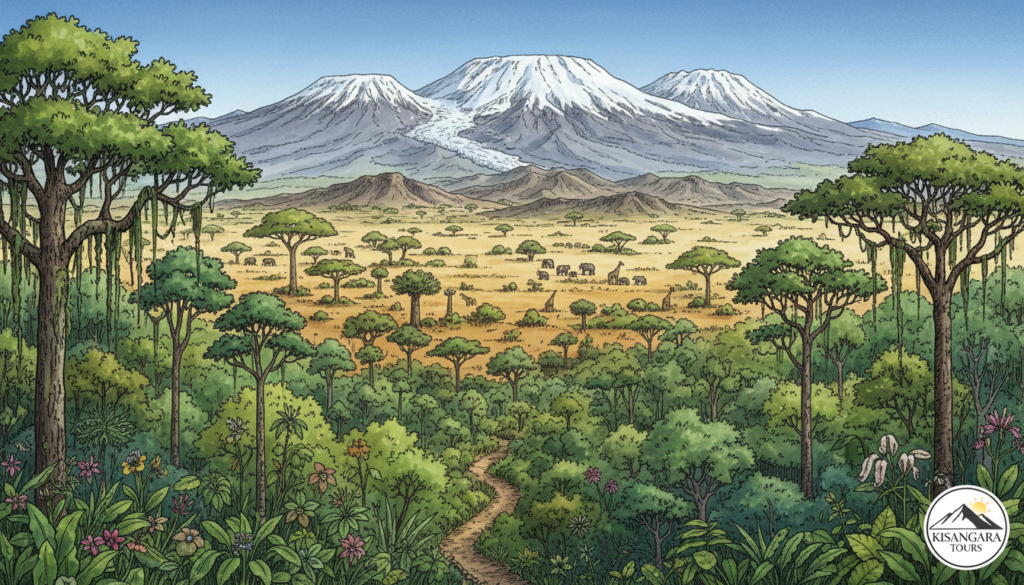
Your ascent becomes a journey through the world’s climates, compressed into a single, vertical pilgrimage. From the fertile lowlands to the arctic summit, you will traverse five distinct climate zones. Each one tells a different part of the mountain’s story.
Influence of Altitude and Climate Zones
We begin in the warm, humid embrace of the forest zone. Here, ancient trees form cathedral-like canopies. The air is thick with moisture, a gift from the Indian Ocean’s trade winds meeting the vast slopes.
As altitude increases, you enter the heath moorland zone. This otherworldly landscape of giant heathers experiences dramatic shifts. Daytime temperatures are mild, but nights bring a significant chill.
The alpine high desert zone is stark and beautiful. At 4,000 meters above sea level, the air thins and wind speeds rise. Warm days give way to rapidly falling evening temperatures.
Seasonal Variations and Weather Conditions
Altitude whispers louder than calendar dates. The weather you encounter depends entirely on your elevation. One zone may be soaked while another is dry.
This creates a temperature gradient spanning dozens of degrees from base to peak. Understanding these climate zones is essential. It transforms your climb from a challenge into an informed, respectful passage.
Planning Your Climb: When is the Best Time?
Your journey’s timing transforms the entire experience, weaving your personal story into the mountain’s seasonal tapestry. The best time to undertake this pilgrimage depends on what you seek from the ascent.
Dry Season vs. Wet Season Considerations
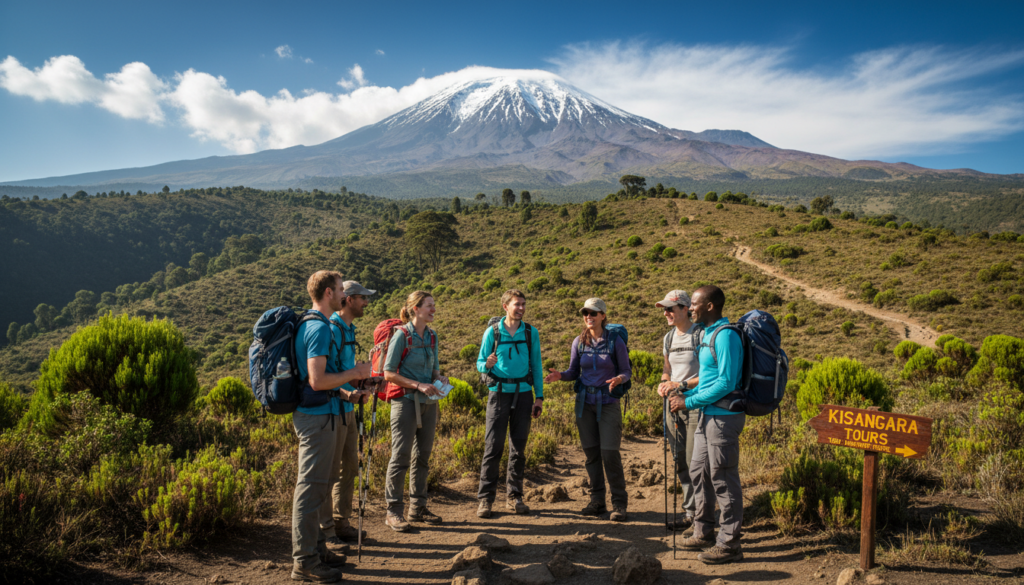
We cherish two generous windows each year: January through March and June through October. These dry season months gift climbers with firm trails and expansive views. Success rates soar when the mountain reveals her clearest pathways.
The wet season tells a different story. From April to May, persistent rain transforms routes into slippery challenges. Yet some experienced adventurers choose this time for solitude and deeper connection.
Monthly Weather Overviews and Success Rates
Each month paints the slopes with unique character. Mid-January to March offers warmer days with manageable crowds. August and September see peak conditions but also more travelers.
Success rates reflect these patterns dramatically. Properly planned dry season attempts succeed 85-95% of the time. Wet season climbs require greater determination, with rates dropping to 60-70%.
We invite you to discuss your ideal time with us. Contact +255 755 002 886 or email info@kisangaratours.com for personalized guidance matching your schedule to the mountain’s rhythms.
Essential Gear and Safety Tips for Climbers
The paradox of preparation unfolds: you must carry protection from equatorial sun and arctic cold within a single backpack. Your equipment becomes a portable ecosystem, responding to dramatic shifts that define each time of day and elevation.
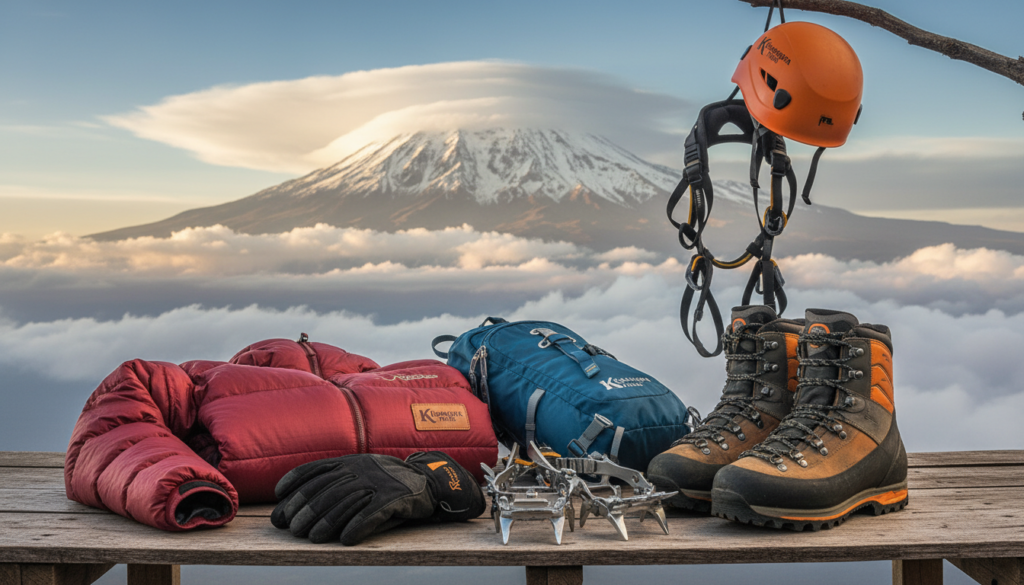
We have witnessed how the right gear separates triumph from retreat. Your journey carries you through five distinct climate conditions in less than a week.
Acclimatization and Physical Preparation
Altitude teaches patience above all else. Your body must manufacture additional red blood cells as air thins systematically. This natural adaptation cannot be rushed.
We recommend longer routes for the gift of time. Seven or eight day journeys increase summit success rates dramatically. Your cardiovascular system needs months of specific training before departure.
Wind becomes your invisible adversary above 4,000 meters. It cuts through inadequate clothing, stealing body heat during the critical summit night.
Packing Lists for Tropical and Arctic Conditions
Your gear list must account for extreme temperature swings. Imagine 30°C sunshine at midday, then -20°C darkness hours later. This 50degree Celsius variation demands sophisticated layering.
| Altitude Zone | Day Temperatures | Night Conditions | Essential Gear |
|---|---|---|---|
| Forest (1,800-2,800m) | 20-25°C, humid | 10-15°C, moist | Moisture-wicking base layers |
| Heath/Moorland (2,800-4,000m) | 15-20°C, variable | 0-5°C, chilly | Insulating mid-layers, sun protection |
| Alpine Desert (4,000-5,000m) | 5-30°C, intense sun | -5 to -10°C, windy | Wind-resistant shell, warm hat |
| Summit Zone (5,000-5,895m) | -5 to 10°C, thin air | -10 to -20°C, extreme wind | Arctic-rated sleeping bag, face protection |
Hydration strategies evolve with altitude. Thin air desiccates with every breath above 4,000 meters. Carry insulated bottles to prevent freezing during cold night hours.
Each time of day demands different gear adjustments. Mornings require warm layers, midday calls for sun protection, evenings demand immediate re-layering as temperatures plummet.
Key Insights on mount kilimanjaro weather
Even the most established rhythms of nature can reveal surprising anomalies over time. We witness the peak transforming before our eyes as glaciers retreat at alarming rates.
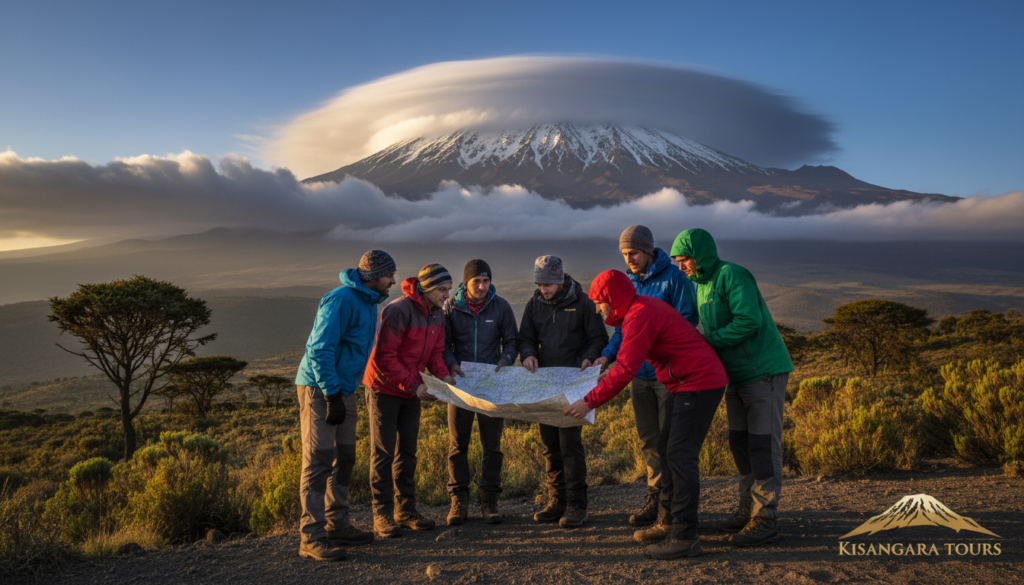
These changes remind us that ancient patterns can shift. Reduced precipitation affects not only the iconic snows but potentially threatens water sources.
Weather Anomalies and Safety Protocols
Understanding the rain shadow effect transforms route selection into strategic advantage. Southern approaches face moisture-laden systems while northern routes shelter in relative dryness.
Safety demands partnership with experienced guides. They read signs invisible to visitors and carry emergency equipment for scenarios you hope never to encounter.
| Route | Precipitation Exposure | Best Season | Safety Considerations |
|---|---|---|---|
| Machame (South) | High rainfall | Dry months | Slippery trails during rain |
| Rongai (North) | Low rainfall | All seasons | More stable footing |
| Lemosho (West) | Moderate exposure | June-October | Wind exposure at higher elevations |
| Marangu (Southeast) | Variable conditions | January-March | Crowded during peak periods |
Our monitoring systems allow real-time decision-making during climbs. Guides modify routes or delay attempts when conditions deteriorate beyond safe parameters.
For detailed insights tailored to your climbing dates, contact our team at +255 755 002 886 or +255 783 292 929. Email info@kisangaratours.com for historical data that informs your planning with precision.
Conclusion
As you stand ready to meet Africa’s rooftop, remember that the greatest gear you carry is knowledge itself. Your understanding of the mountain’s rhythms transforms challenge into respectful passage.
This climb represents more than elevation gain. It’s a journey where preparation meets ancient patterns. Every step teaches lessons about adaptation and resilience.
We invite you to begin your planning with those who know this land intimately. Contact us at +255 755 002 886 or +255 783 292 929. Email info@kisangaratours.com to transform wisdom into triumphant footsteps.
FAQ
What are the most favorable months for a successful summit attempt?
We find the windows of January to mid-March and June to October offer the most stable conditions. These periods fall between the long rainy seasons, granting clearer skies, drier trails, and higher summit success rates. The air is often crisp, and the views from the slopes are truly breathtaking.
How extreme are the temperature changes during the ascent?
The journey presents a profound shift from tropical warmth to arctic cold. At the base, you’ll experience balmy conditions, but upon reaching the summit, temperatures can plummet well below freezing, especially at night. Proper layering is absolutely essential for comfort and safety.
Is there snow on the summit year-round?
The iconic snows of Uhuru Peak are a majestic sight, but they are dynamic. While the glaciers persist, their size fluctuates with the seasons and long-term climate patterns. You will almost certainly encounter snow and ice on your final ascent, a stark contrast to the rainforest below.
How does the long rainy season impact a climb?
The heavy rainfall, typically from late March to May, transforms the mountain. Trails become muddy and slippery, cloud cover often obscures the magnificent views, and the overall experience is more challenging. We generally advise against climbs during this peak precipitation time.
What is the single most important piece of gear for the varying conditions?
A> Beyond sturdy boots, a high-quality, insulated jacket for the summit night is non-negotiable. When the wind chill sets in at high altitude, this piece of gear becomes your primary protection against the intense cold, making the difference between a triumphant moment and a dangerous situation.