Ultimate Guide to Tanzania Migration Season: Expert Insights
We invite you to witness Earth’s most profound natural ceremony. Millions of hoofbeats echo across ancient plains in a rhythm older than memory. This creates a symphony of survival that transforms all who experience it.

This guide serves as your compass to understanding the sacred journey of the Great Migration. We share deep wisdom gathered from years walking these lands. Our intimate knowledge of the Serengeti ecosystem reveals nature’s living tapestry.
As guardians of this wilderness, we reveal timing and location secrets. These insights position you at the heart of nature’s greatest drama. Your safari becomes a transformative journey rather than mere observation.
We bridge modern travel with ancient wilderness rhythms. For personalized assistance, contact us at +255 755 002 886, +255 783 292 929, or email info@kisangaratours.com. Let us help you plan an authentic connection with the natural world.
Key Takeaways
- The Great Migration involves millions of wildebeests, zebras, and gazelles moving throughout the year
- This spectacular wildlife event occurs across the Serengeti ecosystem
- Different locations offer unique viewing opportunities depending on timing
- Proper planning ensures you witness nature’s most dramatic moments
- Expert guidance transforms your experience from observation to immersion
- The movement follows seasonal patterns of rain and grazing lands
- This is one of the world’s most significant natural spectacles
Understanding the Great Migration in Tanzania
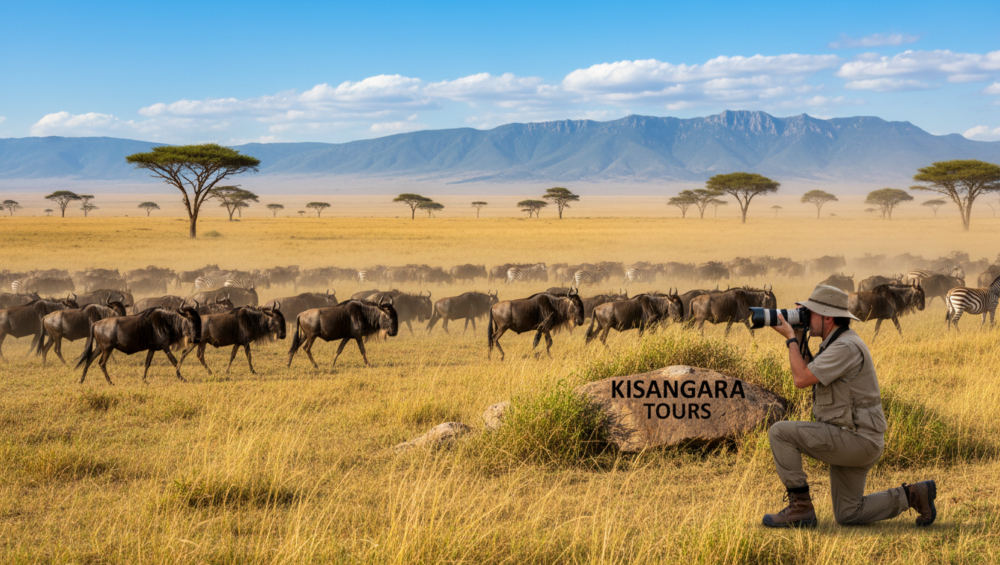
Nature’s grandest procession unfolds across vast plains in a continuous cycle. We honor this eternal journey where millions of wildebeest and zebra follow ancient rhythms. Their movement creates a living tapestry across the Serengeti ecosystem.

The great herds respond to subtle environmental cues that have guided their ancestors for millennia. Rainfall patterns and grass growth stages dictate their clockwise journey throughout the year. This creates nature’s perfect choreography across different regions.
Migration Patterns and Natural Rhythms
These animals move in response to seasonal changes across the plains. Their instincts drive them toward fresh grazing grounds and water sources. The unpredictability of modern rainfall adds wildness to each encounter.
We witness how short rains guide herds southward during November-December. As long rains cease, the journey turns northward. This eternal dance demonstrates survival’s delicate balance.
| Season | Primary Movement | Key Drivers | Wildlife Activity |
|---|---|---|---|
| Short Rains (Nov-Dec) | Southward Journey | Fresh Grass Growth | Calving & Grazing |
| Dry Season | Northward Travel | Water Availability | River Crossings |
| Transition Periods | Circular Patterns | Resource Scarcity | Predator Interactions |
The Ecological Impact on the Serengeti
The great herds serve as landscape architects rather than mere travelers. Their grazing stimulates new growth while hoofbeats aerate the soil. This continuous movement maintains the ecosystem’s delicate balance.
These animals support diverse predator-prey relationships across the plains. Their journey creates nutrient cycling that sustains biological diversity. This makes the Serengeti one of the world’s most important wildlife sanctuaries.
We recognize how each encounter becomes a unique wilderness experience. The herds respond to nature’s ever-changing moods rather than human schedules. This transforms safari observation into authentic immersion.
Month-by-Month Insights for the Great Migration
We decode the seasonal whispers that guide the herds, revealing where to find nature’s most profound moments. Each chapter of the year offers a distinct spectacle. Understanding this rhythm helps you choose the best time for your soul’s desire.

The sacred calendar of the plains is our map. While patterns guide us, nature writes its own story each year.
To witness the calving is to see hope born; to witness the crossing is to see courage tested.
Southern Serengeti Calving and Early Herd Movements
From December through March, the southern plains become a nursery. The short rains paint the landscape emerald. Vast herds gather near Ndutu, preparing for the miracle of birth.
February is the peak of this calving season. Over 500,000 calves are born in a breathtaking window. Their first steps on ancient soil attract predators, creating raw, dramatic scenes. This is truly the best time to see great concentrations of new life.
Northern Serengeti Crossings and Mara River Action
By July, the drama shifts north. The herds converge on the infamous Mara River. This period, through October, features the most intense river crossings.
Thousands of wildebeest plunge into turbulent waters. Massive crocodiles await. The desperate determination displayed here is unforgettable. It is the pinnacle of action for the entire great migration.
| Season Focus | Primary Location | Key Spectacle | Best For |
|---|---|---|---|
| Calving & New Life | Southern Serengeti | Birth of thousands of calves | Intimate wildlife drama |
| River Crossings | Northern Serengeti | Dramatic Mara River action | Heart-stopping adventure |
Planning Your Tanzania Migration Season Safari
We approach safari design as sacred storytelling, weaving your dreams into wilderness reality. Your journey should reflect what calls to your soul most deeply.

Tailor-Made Itineraries for Every Traveler
Some hearts yearn for river-crossing adrenaline. Others seek the quiet miracle of newborn wildlife. We craft each trip around your unique calling.
Our itineraries honor individual rhythms and desires. Whether you prefer intimate encounters or grand spectacles, we shape experiences that resonate.
Choosing the Best Time Based on Weather and Wildlife
The best time to see great migration action is July-October in northern regions. This period offers dramatic river crossings.
Alternatively, December-March reveals calving wonders in southern areas. This season provides profound encounters with new life.
Contact us at +255 755 002 886 or +255 783 292 929. Email info@kisangaratours.com to begin crafting your perfect safari experience.
Best Regions to Experience the Migration
We reveal the sacred geography where ancient rhythms paint living landscapes across the plains. Each territory offers distinct encounters with the moving herds, transforming your perspective of this natural phenomenon.

Exploring the Southern Serengeti and Ndutu Areas
The southern plains become a cradle of life from January through March. Here, nutrient-rich grasses nourish pregnant wildebeest before the miracle of mass calving.
Ndutu occupies a unique position in the northwestern conservation area. The landscape opens into sweeping vistas perfect for witnessing new life amid ancient grasslands.
Discovering North Serengeti and the Masai Mara Border
The northern serengeti represents the pinnacle of drama from July through October. The Mara River becomes nature’s greatest theater for spectacular crossings.
Hundreds of thousands of animals face the terrifying challenge of navigating fast-flowing waters. This creates unforgettable wildlife encounters at the border with Masai Mara.
We help you choose regions based on your desired experience. Each location offers unique connections with the moving herds across different seasons.
Insights on Safari Accommodations and Tips
Your wilderness sanctuary becomes the canvas where safari dreams transform into living memories each evening. We understand that where you rest profoundly shapes your connection to the moving herds.

Top Camps and Lodges Along the Migration Route
Strategic placement along the animal pathways ensures you witness nature’s drama unfold. From January through March, Ndutu-based camps like Tanzania Bush Camps and Heritage Migration Camp position you at the heart of calving wonders.
During peak crossing months, northern properties like Sayari Camp offer front-row seats to river dramas. Mobile luxury camps follow the herds, creating intimate wilderness connections.
Expert Advice for an Unforgettable Safari Experience
Beyond accommodation selection, we share wisdom for deep immersion. Hire guides who read animal behavior like ancestral poetry. Maintain flexibility to embrace unexpected wildlife gifts.
Practice patience during river gatherings—herds may wait days before crossing. Book peak season camps six to twelve months ahead for optimal positioning.
Consider shoulder seasons for excellent value and quieter wilderness encounters. Your migration safari becomes transformative when you surrender to nature’s timeline.
Get in Touch for Your Ultimate Safari Experience
We stand ready to guide you from imagination to authentic wilderness encounter. Your vision of witnessing nature’s grand spectacle deserves careful nurturing and expert planning.

Our team brings decades of combined experience walking these ancient lands. We understand the subtle patterns that guide the great herds across the plains.
Contact Us
Give us a call at +255 755 002 886 or +255 783 292 929. Speak directly with guides who have witnessed countless river crossings and calving wonders.
We listen carefully to your vision before offering honest guidance. Our expertise helps position you for the most profound wildlife encounters.
Reach out via info@kisangaratours.com or kisangaratours@gmail.com. Share your travel dates, group size, and interests.
We respond with customized recommendations and detailed itineraries. Every inquiry receives the serious attention such a transformative journey deserves.
Contact us today to begin crafting your unforgettable African adventure. Let us help you witness Earth’s living masterpiece with your own eyes.
Conclusion
Beyond the practical planning lies the soul of the journey—the quiet moments when wilderness speaks directly to the heart. The great herds move in rhythms that predate human memory, offering a window into Earth’s ancient pulse.
This living spectacle unfolds as a year-round cycle of transformation. Each chapter reveals nature’s profound honesty. We witness vulnerability and courage in equal measure.
Your role becomes that of humble observer in a drama where human presence remains peripheral. The real story involves survival, birth, and the eternal search for sustenance.
While we’ve shared when and where to position yourself, consider how the green season offers its own unique. Fewer crowds reveal more intimate connections with the land.
The deepest preparation happens within. It requires surrendering expectations and embracing whatever the wilderness chooses to reveal. This journey transforms observation into sacred participation.
We await the privilege of standing beside you as the herds pass. Together, we’ll witness nature’s living masterpiece unfold before our eyes.
FAQ
When is the best time to see the river crossings?
The most dramatic Mara River crossings typically occur from July through October. This is when the massive herds gather in the northern Serengeti, driven by the search for fresh plains and water. Timing is everything, as these spectacular events hinge on rainfall patterns.
Where do the herds go during the calving season?
From late January to February, the journey cycles back to the nutrient-rich southern Serengeti and Ndutu plains. Here, hundreds of thousands of wildebeest calves are born in a remarkably short period, attracting predators and creating an incredible wildlife spectacle.
What is the most challenging part of the animals’ journey?
The river crossings are arguably the most perilous. At the Grumeti River in the western corridor and later at the Mara River, the herds face strong currents and waiting crocodiles. It is a raw, unfiltered testament to the struggle for survival that defines this ancient pilgrimage.
How far in advance should I plan my trip?
We recommend planning your safari at least 9 to 12 months ahead, especially for peak periods like the crossings or calving. This ensures access to the best camps situated directly along the moving herds’ path for a truly front-row experience.
Can I witness this incredible event throughout the year?
A> While the herds are always on the move, the most concentrated viewings happen during specific windows: calving in the south (Jan-Feb), the Grumeti River gathering (May-June), and the northern crossings (Jul-Oct). The dry season often offers the clearest sightings as animals congregate near water sources.