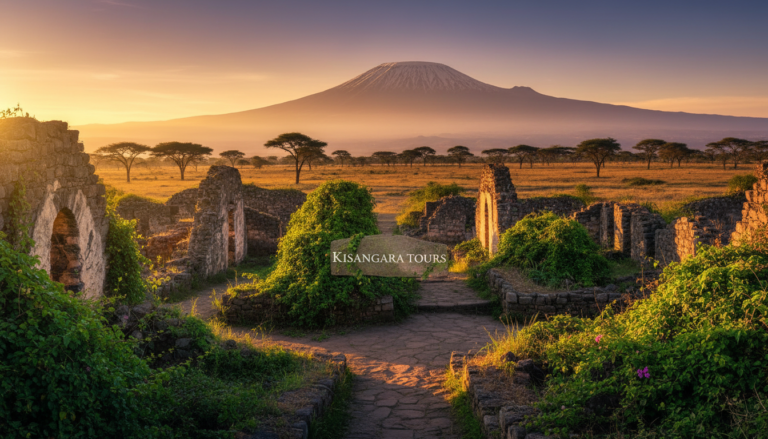
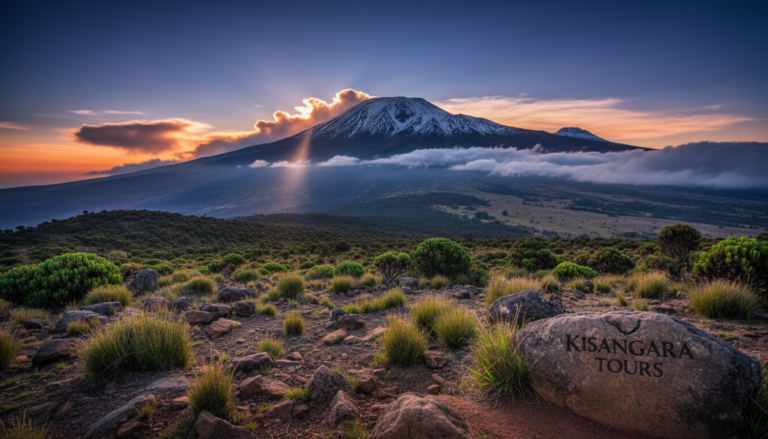
We welcome you to the mountain that defines our horizon: Mount Kilimanjaro. This is not just a peak of rock and ice. It is a living monument, Africa’s tallest sentinel standing at 19,341 feet. Its solitary presence on the plains is a sight that humbles the soul.
This ancient giant rises from northern Tanzania, a land we call home. Its summit pierces the equatorial sky, a paradox where glaciers glow under the African sun. The journey up its slopes is a passage through the world‘s climates, from lush forest to arctic silence.
We have witnessed this transformation in countless travelers. The climb is a test of spirit, not just strength. Each step is a meditation. You walk through shifting ecosystems, each one a chapter in an ancient story.
Your success on this mountain hinges on more than training. Choosing the best time to climb Kilimanjaro is your first crucial decision. It determines whether you walk beneath clear, generous skies or face the mountain’s raw, unpredictable power. Timing is as vital as your preparation.
Key Takeaways
- Mount Kilimanjaro is Africa’s tallest peak, standing at 5,895 meters (19,341 feet).
- It is a free-standing mountain located in northern Tanzania, near the border with Kenya.
- The ascent takes you through multiple climate zones, from tropical to arctic.
- The journey is more a test of mental determination than technical climbing skill.
- Selecting the optimal season for your climb is critical for a safe and rewarding experience.
- The mountain, known as the “Roof of Africa,” is one of the renowned Seven Summits.
- Its unique position creates the stunning contrast of equatorial sun shining on glacial ice.
Understanding Kilimanjaro’s Unique Location
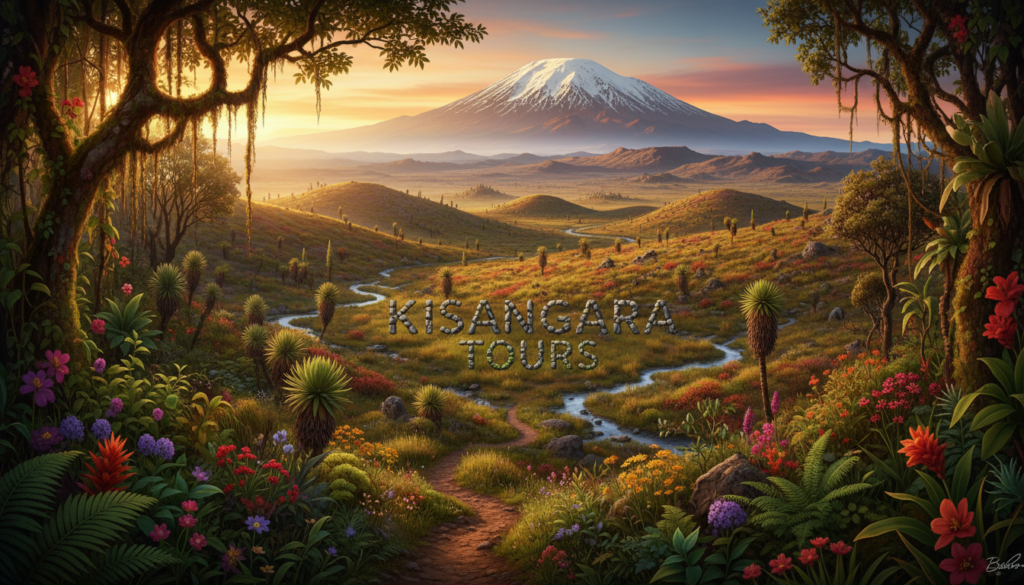
Our homeland cradles a mountain whose presence transcends mere geography. This ancient giant stands within Kilimanjaro National Park, a protected world heritage site that honors nature’s grandeur.
Geographical Overview and Map Insights
The mountain dominates the entire area, rising dramatically from the surrounding plains. Its position near the Kenya border creates a spectacle visible for miles. This national park preserves a landscape that belongs to all humanity.
Climate Zones from Tropical Forests to Alpine Deserts
We guide travelers through five distinct ecological zones. Each layer reveals a different face of the mountain’s complex climate. From lush rainforests to alpine deserts, the journey compresses Earth’s diversity into a single ascent.
The Kilimanjaro National Park protects this remarkable transition. As a UNESCO world heritage site, it safeguards the mountain’s sacred ecology. This precious area represents our commitment to preserving wild places.
Where is Kilimanjaro?
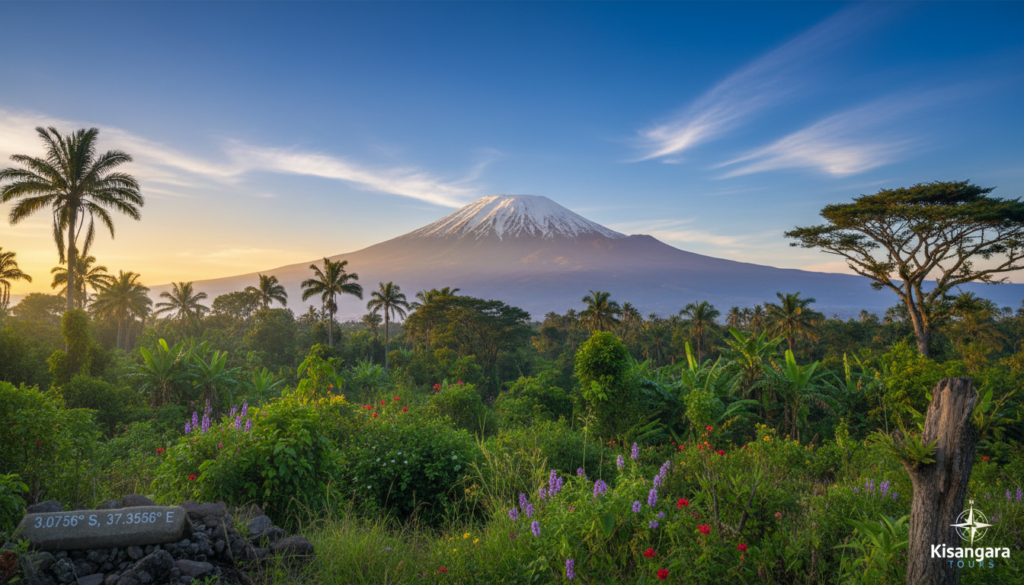
At 3.0674° S, 37.3556° E, our continent’s highest peak stands as a geographical anchor for transformative journeys. This sacred area in northern Tanzania calls to those seeking elevation beyond mere altitude.
Access Points and Travel Routes
Your passage to mount kilimanjaro flows through strategic gateways. The primary kilimanjaro international airport serves as your threshold, positioned between Moshi and Arusha.
This modern international airport connects global travelers to ancient wilderness. Alternative routes include Nairobi’s hub or domestic flights to Arusha Airport. Each path leads to the same magnificent destination.
Mapping Kilimanjaro’s Precise Coordinates
The mountain’s coordinates mark more than a map point. They represent a destination that has drawn seekers across continents. Rising 19,341 feet above sea level, this elevation measures transformational distance.
Located near the Kenyan border, mount kilimanjaro graces two nations with its presence. From Arusha, a ninety-minute journey carries you to the mountain’s realm.
For detailed planning tailored to your vision, connect with our team: call +255 755 002 886 or +255 783 292 929. Email info@kisangaratours.com or kisangaratours@gmail.com.
The Best Time to Climb Kilimanjaro
Timing your ascent is the first conversation you have with this ancient peak. It determines whether you meet the mountain in its generous mood or witness its formidable power.
Dry Season Highlights: January, February, and September
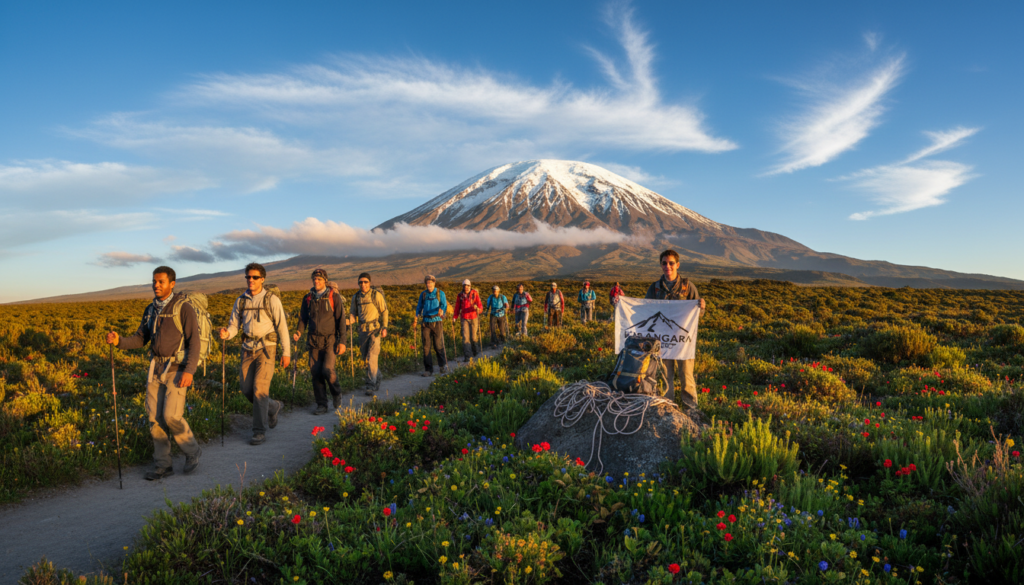
We have learned the mountain’s rhythms through countless journeys. The best time to climb aligns with dry tranquility. January, February, and September offer stable trails and skies of profound clarity.
This time transforms the challenge. The air feels crisp, and visibility stretches to the horizon. It is the season of achievable triumph.
Rainy Season Considerations and Safety
Conversely, the long rains of March to May and the short rains of November test resolve. Trails become slippery, and clouds veil its majesty.
Fewer travelers mean a solitary experience. But this time demands respect for the mountain’s raw force. Safety becomes the paramount consideration.
Seasonal Weather Challenges and Gear Tips
Weather here defies simple forecasts. A sunny start can shift to a sudden storm. Your preparation must embrace this unpredictability.
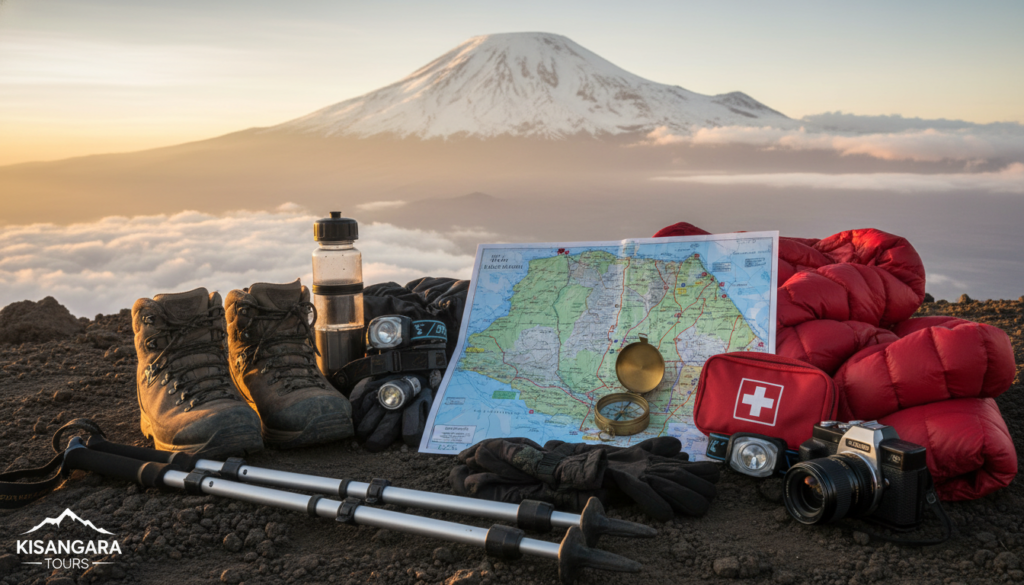
Gear selection is your shield. Even in dry seasons, waterproof layers are essential. Summit attempts require insulation for sub-zero temperatures and potential snow.
The best time for your climb balances ideal conditions with your inner readiness. It is a personal alignment of spirit and season.
Planning and Preparation for the Climb
We believe preparation for this ascent is a sacred ritual—a careful balancing of physical readiness and spiritual alignment with the mountain’s rhythms. Your choice among the seven distinct routes shapes the entire experience, from Machame’s dramatic scenery to Lemosho’s superior acclimatization profile.
Acclimatization and Physical Preparation
Altitude presents the true challenge, not technical difficulty. Your body needs time to adapt, which is why longer trek options dramatically increase success rates. We advocate for routes that build elevation gradually.
Physical training should begin months before your journey. Cardiovascular conditioning builds endurance for long hiking days. Strength training prepares your legs for endless ascending. Practice hikes with loaded packs simulate the mountain experience.
Gear, Permits, and Route Selection
Every climb kilimanjaro requires a licensed guide—this is essential safety, not bureaucracy. Our guides possess generations of mountain knowledge, reading weather patterns and recognizing altitude sickness symptoms.
Proper gear selection can determine success. Quality boots prevent blisters, layering systems regulate temperature, and sleeping bags rated for freezing ensure recovery rest. The right equipment supports climbers at every level.
For expert guidance on route selection and personalized planning, contact us at +255 755 002 886 or email info@kisangaratours.com. We’ll help you reach summit success with wisdom earned through countless journeys.
Discovering Natural and Cultural Heritage of Kilimanjaro
Beyond the climb itself lies a deeper journey into the cultural and natural heritage that makes this mountain sacred. This world heritage site reveals stories written in terraced gardens and ancient forests.
Local Culture and the Chagga People’s Traditions
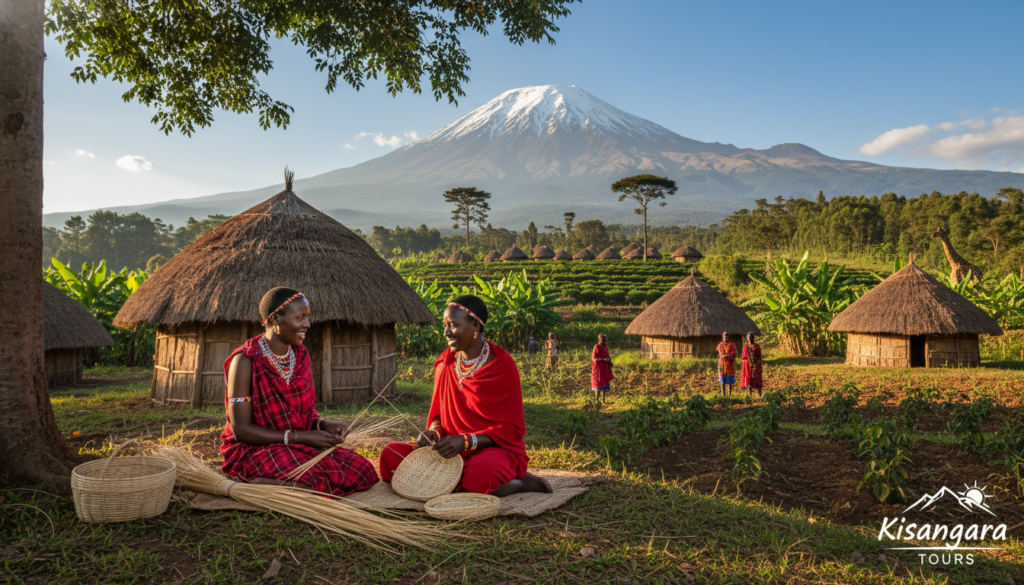
We walk alongside the Chagga people, whose ancestors have cultivated these slopes for centuries. Their agricultural wisdom transforms volcanic soil into thriving coffee and banana gardens.
For these people, the mountain stands as a sacred presence woven through mythology and daily life. Their traditions represent a sustainable partnership with the ecosystem.
Biodiversity, Conservation, and Tourism Benefits
The Kilimanjaro National Park protects staggering diversity across its vertical zones. From rainforests with 180 bird species to the haunting alpine desert, each layer reveals unique natural beauty.
Responsible tourism creates vital economic benefits for local communities. Each climbing journey employs teams of guides and porters, ensuring benefits reach the people who steward this treasure.
Conservation efforts in this national park balance human access with wilderness preservation. We advocate for sustainable practices that honor both the world heritage designation and the Chagga people‘s ancestral connection.
Conclusion: Your Journey to the Roof of Africa Awaits
Your transformation begins with a single decision to answer the mountain‘s ancient summons to its frozen summit. Standing at Uhuru peak, you witness sunrise ignite glaciers in golden fire—a moment when personal achievement merges with universal triumph.
This solitary giant rises from the plains, unconnected to any range. Its dramatic ascent creates a journey through multiple climate zones. The climb demands endurance and mental strength, yet requires no technical climbing expertise.
We’ve guided countless climbers through this transformative experience. Each route offers unique perspectives on the same magnificent destination. The mountain reveals what becomes possible when comfort yields to commitment.
To begin planning your journey with experienced guides who know this sacred, reach us at +255 755 002 886 or email info@kisangaratours.com. Your summit awaits—we would be privileged to walk this path alongside you.
FAQ
Where exactly is Mount Kilimanjaro located?
What is the best time to climb Kilimanjaro for optimal conditions?
How difficult is the climb, and what experience level is required?
What are the different routes to the summit, and how do I choose?
What should I know about the cultural heritage around the mountain?
How does the climate change as you ascend the mountain?
What essential gear and permits are needed for the climb?

Frida Cliff
Farida Clif is the founder of Kisangara Tours and a seasoned safari expert with years of experience in Tanzania’s travel industry. She is dedicated to crafting authentic safari experiences that highlight the country’s wildlife, culture, and natural beauty.