
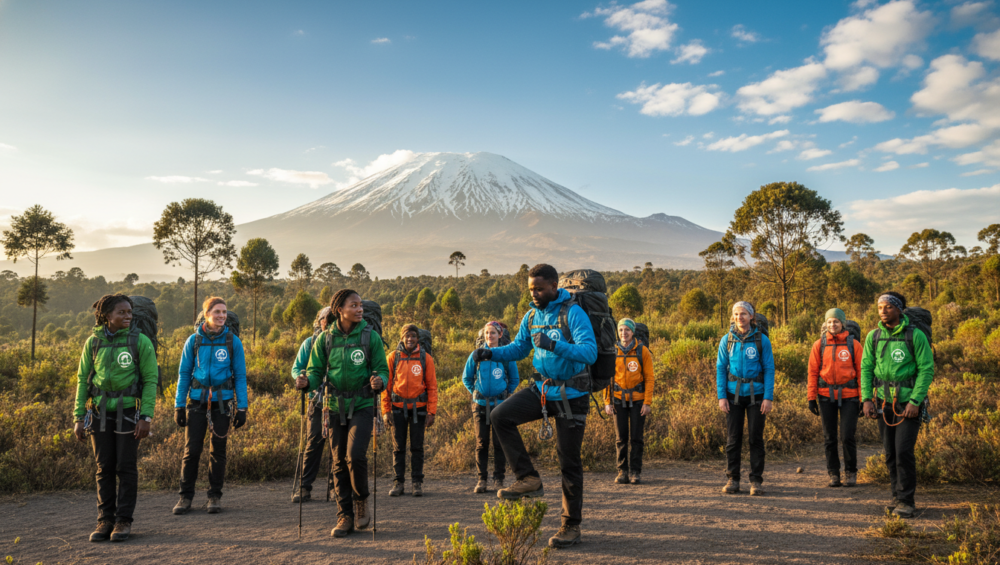
Training to Climb Mt Kilimanjaro, How Long to Climb Kilimanjaro
Mount Kilimanjaro rises from the African plains, a silent giant reaching 19,340 feet into the sky. It is Africa’s highest peak and the world’s tallest free-standing mountain. This is not a journey to be taken lightly. It calls for deep respect and months of dedicated preparation.

We see this ascent as more than a physical challenge. It is a pilgrimage that reshapes the soul. The question of how long to climb Kilimanjaro is deeply personal. It intertwines with the depth of your training and your willingness to be transformed.
Success on this great mountain rests on three pillars. Proper acclimatization is vital, often requiring eight days or more on the slopes. Specific physical training builds the necessary strength. Finally, our guides, born in the shadow of the peak, offer wisdom that turns a climb into a profound experience.
We walk with you not as instructors, but as companions. We have witnessed thousands of people discover their inner strength here. The time you invest honors both the mountain and yourself. This is a commitment to a journey that will stay with you forever.
Key Takeaways
- Mount Kilimanjaro is Africa’s highest peak and requires significant physical and mental preparation.
- A successful climb depends on proper acclimatization, physical conditioning, and expert guidance.
- The journey is a transformative experience, demanding respect and a deep personal commitment.
- Preparation time varies but is essential for safety and to fully appreciate the ascent.
- Local guides provide invaluable knowledge, ensuring a respectful and enriching climb.
Understanding Mt Kilimanjaro’s Unique Challenges
We approach this mountain not as conquerors but as students, learning from its ancient wisdom at every turn. The journey reveals itself through layers of challenge that demand both physical readiness and mental flexibility.

Altitude, Weather, and Ecosystem Variations
Kilimanjaro National Park contains five distinct worlds stacked vertically. You move from lush rainforests to barren alpine deserts within days. The altitude transforms everything—temperature, vegetation, even the quality of light.
Weather shifts dramatically as you ascend. Tropical warmth gives way to arctic conditions. At the summit, temperatures can plummet to -30°C while the base remains mild. This vertical journey exposes people to Earth’s full climatic range.
The Importance of Acclimatization
Altitude adaptation cannot be rushed. Your body performs invisible miracles each day, creating red blood cells to function in thin air. We’ve witnessed how proper time for acclimatization transforms the experience.
An extra day on the mountain often means the difference between success and retreat. This patience allows you to descend under your own power, honoring both safety and the profound nature of the journey.
Training to Climb Mt Kilimanjaro, How Long to Climb Kilimanjaro
The path to Uhuru Peak begins not on the mountain’s slopes but in the quiet discipline of preparation. We witness this transformation in the months before departure, where each step becomes a meditation.
Overview of Essential Training Components
Your preparation must mirror the mountain’s demands. Cardiovascular endurance sustains hours of effort. Leg strength powers steep ascents while core stability navigates uneven terrain.
Downhill conditioning proves equally vital for the demanding descent. These elements work together like instruments in an orchestra, each essential for the symphony of your ascent.

| Current Fitness Level | Preparation Time | Primary Focus Areas |
|---|---|---|
| Active (3-4 workouts weekly) | 2-3 months | Altitude simulation, endurance building |
| Moderate (1-2 workouts weekly) | 4-5 months | Base fitness, strength development |
| Beginner (sedentary lifestyle) | 6+ months | Foundation building, gradual progression |
Time Frames Based on Fitness Levels
Your starting point determines the journey’s duration. Active individuals may need just eight weeks. Those beginning from stillness require half a year or more.
This timeframe honors biological adaptation. Your body needs months to develop capacity for sustained effort in thin air. The investment reflects deep respect for the mountain’s challenge.
Consistent work creates what we call mountain memory. Your body learns the precise movements and endurance required. This preparation transforms the entire experience.
Designing Your Custom Climb Preparation Plan
Before mapping the route upward, we must first understand the terrain of our own physical readiness. This honest assessment becomes the foundation upon which every successful ascent is built.

Assessing Your Current Fitness Level
We begin with a simple truth: your starting point matters less than your willingness to progress. A thorough fitness evaluation reveals your current level across multiple dimensions.
Consider your weekly routine and available resources. Do you have access to hills or stair-climbing facilities? Can you commit ten hours weekly to focused training? This assessment uncovers hidden weaknesses before the mountain exposes them.
Setting Realistic Training Goals
Many people mistake general fitness for mountain-specific conditioning. A marathon runner may struggle with sustained uphill hiking carrying weight. The way forward requires patient, progressive building.
Your custom plan should honor your unique circumstances. We celebrate every starting place because consistent progression matters more than initial capacity. This thoughtful approach transforms preparation from chore to sacred ritual.
Incorporating Endurance and Strength Workouts
The mountain reveals its secrets not to the swift, but to those who understand the marriage of endurance and strength. These elements intertwine like roots and trunk of the ancient baobab—neither sufficient alone, but together creating the foundation for sustained effort.
We guide you toward preparation that honors specific demands awaiting you. This is not random exercise but precise conditioning replicating the muscular patterns and energy systems you’ll encounter.
Outdoor Hikes and Stairmaster Sessions
Your backpack becomes your constant companion during these sessions. The weight serves double purpose: building leg capacity and familiarizing your body with carrying load for extended hours.
Outdoor hiking provides what no gym can replicate. Uneven terrain challenges stability while downhill sections stress muscles differently than ascent. Each step on natural ground builds mountain-specific resilience.

When hills aren’t accessible, stairs become your vertical gymnasium. Stairmaster sessions lasting 60-90 minutes teach your legs the specific strength required for gaining thousands of feet elevation.
Heart Rate Zone Training for Mountain Conditioning
Heart rate zone training transforms workouts from arbitrary effort to scientific precision. Maintaining specific rate zones develops the aerobic engine powering multi-day expeditions.
Zone 2 builds your fat-burning efficiency while Zone 3 develops the threshold where you sustain effort without depletion. This controlled approach prevents working too hard during base-building phases.
Your target becomes gaining 700 meters elevation while maintaining 135-140 heart rate with 20 pounds in your pack. This specific conditioning creates what we call mountain memory in your muscles.
Building Climbing-Specific Fitness
Elevation gain is the true language of the mountain, and your weighted pack becomes your translator. We guide you toward preparation that speaks this language fluently.

Simulating Elevation Gains with Weighted Backpacks
Your backpack transforms from mere equipment to your most honest teacher. The progressive weight you carry builds not just muscle but mountain wisdom.
We follow a simple principle: train with double the pack weight you’ll carry on the actual ascent. This compensates for the oxygen theft of high altitude.
| Training Phase | Backpack Weight | Elevation Gain | Session Duration |
|---|---|---|---|
| Foundation Building | 6 kg (13 lbs) | 500 meters | 3 hours |
| Strength Development | 8 kg (18 lbs) | 750 meters | 5 hours |
| Peak Performance | 10-12 kg (22-26 lbs) | 1000+ meters | 6-8 hours |
The strength gained through weighted climb simulation differs fundamentally from gym conditioning. It’s the ability to sustain effort hour after hour.
When you can comfortably gain 1,000 meters with your training weight and repeat it the next day, your body speaks the mountain’s language. You are ready.
Navigating Kilimanjaro’s Routes and Acclimatization Schedules
Kilimanjaro’s seven main arteries pulse with distinct energies, each carrying trekkers upward through different ecosystems and experiences. The chosen route becomes your dialogue with the mountain—a conversation that unfolds over multiple days of gradual revelation.
Route Selection: Lemosho, Machame, and More
We guide most expeditions along the lemosho route, where eight days allow your body to adapt while your spirit absorbs stunning scenery. This path offers exceptional trekking through varied landscapes with fewer crowds.
The machame route, known for its “climb high, sleep low” pattern, provides solid altitude adaptation over six to seven days. Its dramatic scenery makes every day of the journey memorable.

For those seeking ultimate acclimatization, the northern circuit offers eight to nine days circling the mountain’s remote northern slopes. The rongai route approaches from Kenya’s border, offering drier conditions and peaceful trekking.
Planning Extra Days for Acclimatization
Each additional day on the mountain dramatically increases your chances to successfully climb mount Kilimanjaro. We’ve witnessed how proper time for adaptation transforms the experience from struggle to sacred journey.
The extra time allows your body to create the red blood cells needed for high altitude function. This patience honors both safety and the mountain’s ancient wisdom, making your climb mount Kilimanjaro a transformative pilgrimage rather than a race against time.
Practical Training Tips and Gear Preparation
Your boots and backpack are not just equipment; they are your most intimate companions on this journey. We guide you toward making them trusted allies long before you reach the mountain.

Integrating Indoor and Outdoor Workouts
Your training environment should mirror the mountain’s versatility. Outdoor hikes build natural resilience while indoor sessions deliver precise conditioning.
| Training Environment | Primary Benefit | Weekly Frequency |
|---|---|---|
| Outdoor Hills/Trails | Natural terrain adaptation | 2-3 sessions |
| Stairmaster/Building Stairs | Vertical gain simulation | 2 sessions |
| 30% Incline Treadmill | Controlled ascent practice | 1 session |
Each day of preparation should serve a specific purpose. Multi-day back-to-back hikes teach your body the recovery rhythm needed for consecutive trekking.
Familiarizing Yourself with Trekking Equipment
Your pack should feel like an extension of your body. Train with double the weight you’ll carry on the mountain to build strength reserves.
Wear your trekking boots during every hiking session until they mold to your feet. This prevents blisters and creates unconscious familiarity.
The equipment that feels foreign in your living room becomes your greatest comfort at 15,000 feet.
Test all gear thoroughly before departure. Know your sleeping bag’s warmth, your layers’ combinations, your backpack‘s exact weight distribution. This preparation transforms potential problems into trusted tools.
Staying Motivated and Tracking Your Progress
Your transformation unfolds through the silent language of incremental gains, where each week reveals new capacities. We witness how motivation flourishes not from distant summit dreams but from tangible evidence of your evolving strength.

Using Fitness Tests and Milestones
Regular assessment creates a roadmap of your readiness. These benchmarks serve as honest conversations between your current fitness level and the mountain’s demands.
We celebrate the moment your weighted pack feels lighter, when elevation gain becomes sustainable rather than exhausting. This tangible progress builds the confidence that predicts summit success.
| Training Phase | Elevation Goal | Pack Weight | Time Target |
|---|---|---|---|
| Foundation Building | 1,000 feet | 10 lbs | 1 hour |
| Strength Development | 2,000-3,000 feet | 20 lbs | 2-3 hours |
| Peak Readiness | 600 meters | Full trek weight | 90 minutes |
Commit to ten-plus hours weekly in your final preparation months. Monitor how your body performs during back-to-back weekend hikes.
The final week before departure should involve reduced intensity. Arrive at the mountain fresh, well-hydrated, and confident in your preparation. Your consistent work over months builds both physical capacity and mental resilience for the climb ahead.
Contact Us for Expert Guidance
Your journey toward the summit begins with a conversation, a shared vision between you and those who know the mountain intimately. We extend our hands across oceans, inviting you to draw from our deep well of experience.

Our guides have stood where you dream of standing. They understand what it means to prepare for a kilimanjaro climb. This wisdom becomes your foundation when you reach out.
Give Us a Call: +255 755 002 886 | +255 783 292 929
Hear the warmth in our voices as we answer your questions. We help you understand exactly what preparation your unique situation requires for climbing kilimanjaro.
Email Us: info@kisangaratours.com | kisangaratours@gmail.com
Share your timeline concerns or requests for personalized guidance. We respond with specific recommendations, not generic advice. Our collective experience spans hundreds of successful ascents.
When you choose to climb kilimanjaro with us, you join our family. The same team has worked together for over a decade. This creates seamless teamwork that supports your journey to the summit.
We honor your investment by ensuring you receive expert guidance. Our passionate guides view your success as their sacred responsibility. The mountain responds to proper preparation and experienced companionship.
Conclusion
The summit awaits not as a prize to be won, but as a gift earned through dedicated preparation. Your journey transforms ordinary steps into sacred movement, each weighted pack session and early morning hike building the foundation for your ascent.
We have walked this path with countless people and witnessed how proper preparation unlocks the mountain’s wisdom. The convergence of physical readiness, route selection, and acclimatization days creates the conditions for success.
Your strength and endurance become your companions when thin air challenges every breath. The sustainable pace you maintain honors both the mountain and your personal transformation.
This experience reshapes how you understand your own capabilities. When you finally reach summit, you carry with you the profound satisfaction of preparation meeting worthy challenge.
FAQ
How long does it take to reach the summit of Kilimanjaro?
The time to reach Uhuru Peak varies by route, typically taking 5 to 9 days. We prioritize longer itineraries like the 8-day Lemosho or 9-day Northern Circuit for better acclimatization, dramatically increasing your success rate. The final summit push itself usually begins around midnight and takes 6-8 hours.
What is the best way to train for the climb’s physical demands?
Focus on building strength endurance through consistent hiking with a weighted pack. We recommend long weekend hikes on uneven terrain and stair-climbing sessions to simulate the mountain’s relentless ascent. Your fitness level should allow you to hike for 6-8 hours comfortably while carrying a daypack.
Which route offers the highest chance of a successful summit?
Routes with more days for acclimatization, such as the Northern Circuit or the 8-day Lemosho route, have the highest success rates. These paths allow your body to adapt gradually to the altitude, which is the most critical factor in reaching the summit safely and joyfully.
How difficult is the climb, and what fitness level is required?
Climbing Kilimanjaro is a strenuous trek, not a technical climb. The challenge lies in the altitude and sustained endurance. A good baseline fitness is essential; you should be able to hike for several hours multiple days in a row. Our guides are masters at setting a sustainable “pole pole” (slowly, slowly) pace.
What should I pack in my backpack for summit day?
For your summit pack, we advise layering for extreme cold: thermal layers, a warm jacket, gloves, a headlamp, water, high-energy snacks, and your camera. Your main backpack will remain at the final camp. We provide detailed packing lists to ensure you have everything needed without excess weight.
When is the best time of year to plan my trek?
The clearest and driest times are the dry seasons: late June to October and December to early March. These windows offer the most stable weather conditions in Tanzania’s Kilimanjaro National Park, with brilliant skies and optimal trekking conditions for your ascent.