
Safari Photography Tips: Lessons from Past Expeditions
We welcome you to the heart of Tanzania’s wild soul. Here, the golden light of dawn paints stories on the vast plains. Every creature holds ancient wisdom, waiting for a patient observer to capture its essence.
This guide is born from decades of journeying with artists across the Serengeti and into the Ngorongoro Crater. We have ventured into remote corners where the land itself becomes the greatest teacher. The craft we share is more than a technical skill; it is a form of deep meditation.
It is a silent conversation between you and the wild. This practice builds a bridge from our modern world to landscapes unchanged for millennia. We have seen travelers arrive with the finest gear and depart with something far more valuable: a new way of seeing.
They learn to view the world with an artist’s eye and a conservationist’s heart. The lessons we share are a collective wisdom. They come from our Tanzanian guides, dedicated naturalists, and the enduring spirit of the land.
These insights will help you prepare for a profound journey. Whether it is your first expedition or a return to deepen your craft, our goal is the same. We aim to help you capture not just an image, but the very soul of Africa.
Key Takeaways
- The best wildlife images come from patience and connection, not just equipment.
- Approach the wilderness with respect, aiming to observe without intruding.
- Early morning and late afternoon light reveal the most magical scenes.
- Learn to see with an artist’s eye, focusing on story and emotion.
- Your guide’s local knowledge is an invaluable resource for finding unique moments.
- Embrace the journey as a personal transformation, not just a photo opportunity.
Introduction to Safari Photography
Where the earth still speaks in ancient tongues, the art of preserving wild moments becomes a sacred practice. This discipline demands more than technical skill—it requires patience, ecological understanding, and spiritual attunement to nature’s rhythms.
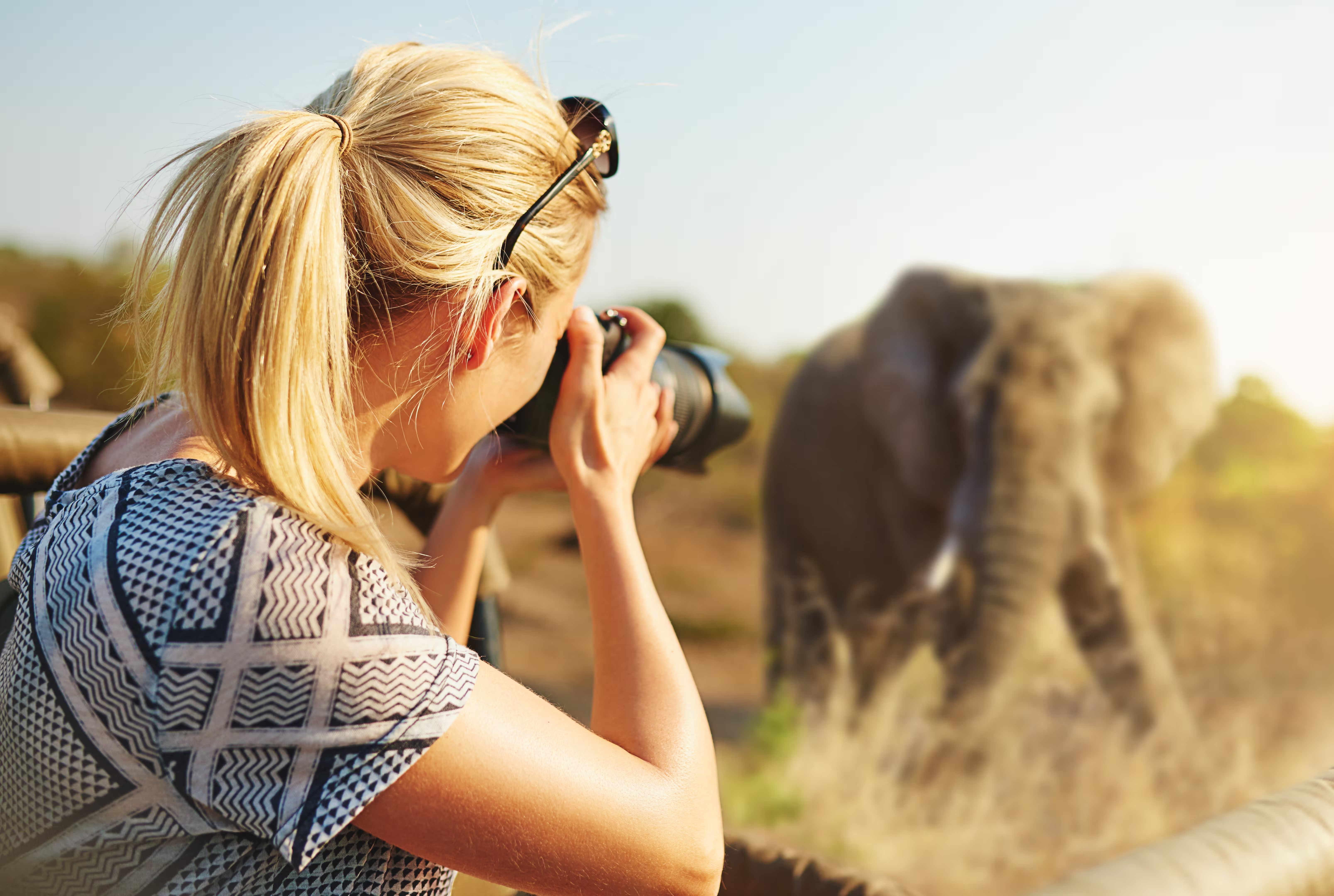
We’ve learned that photographers return most satisfied when they embrace realistic expectations. Specialists may spend months pursuing one perfect shot, while your journey unfolds across precious days.
| Expectation | Reality | Outcome |
|---|---|---|
| Perfect shots every day | Moments of magic between waiting | Authentic story of your journey |
| Total control over conditions | Animals and light dictate the rhythm | Learning to adapt and anticipate |
| Award-winning images immediately | Personal transformations captured frame by frame | Unique visual diary of discovery |
The journey toward compelling wildlife imagery begins long before you board your flight, starting with research and deepening as you learn to read animal behavior.
Tanzania’s wilderness offers unparalleled opportunities—from the Great Migration’s drama to intimate lioness moments. Yet success requires preparation and willingness to embrace both triumph and imperfection.
Unlike studio work, wild imagery introduces variables beyond control: unpredictable movement, rapid light changes, vehicle limitations. Dust becomes a constant companion to both you and your equipment.
Our role extends beyond finding animals. We help distinguish between taking pictures and making photographs—between documenting and truly witnessing nature’s sacred theater.
The most important lesson from our expeditions: approach with humility, curiosity, and reverence. The wilderness will reward you with moments no camera could ever guarantee.
Essential Safari Photography Tips
Through decades of guiding artists across Tanzania’s wild heart, we’ve distilled essential wisdom that transforms how one sees through the viewfinder. This knowledge emerges from countless expeditions where patience proved more valuable than any lens.
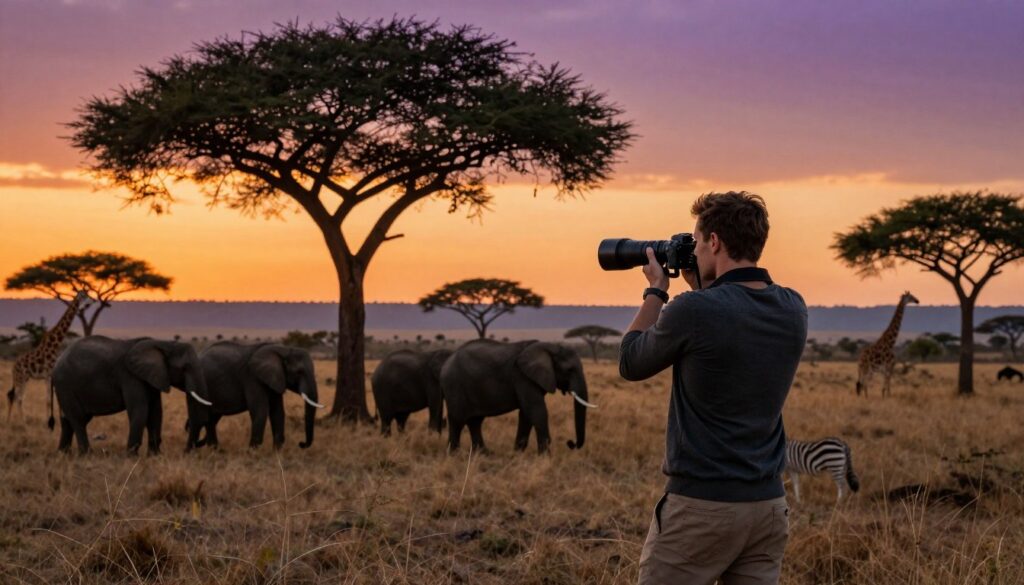
Vision consistently triumphs over equipment. The artist who understands light and story creates more compelling work than someone with expensive gear but no creative eye. Your camera becomes an extension of your perception, not the source of it.
We witnessed this truth when one traveler captured 900 frames but selected only 80 as truly worthy. This ruthless editing separates memorable wild imagery from overwhelming collections. Quality always outweighs quantity in this sacred craft.
| Common Approach | Recommended Mindset | Resulting Imagery |
|---|---|---|
| Chasing every animal sighting | Waiting with one compelling subject | Deep, intimate connections |
| Camera stored between shots | Camera always ready in hand | Spontaneous magic captured |
| Seeking technical perfection | Embracing the experience itself | Authentic storytelling |
Readiness defines success in the bush. Keep your equipment accessible and your awareness sharp. Anticipate behavior patterns rather than reacting to them.
The most transformative photography tips we share liberate you from perfection’s tyranny. Sometimes the richest moment occurs when you lower your camera and simply witness nature’s magnificence unfolding.
How to Prepare for a Wildlife Photography Adventure
A truly transformative expedition is crafted not by chance, but through deliberate and soulful preparation that honors the wild. This initial phase lays the groundwork for every magical moment you will later frame.
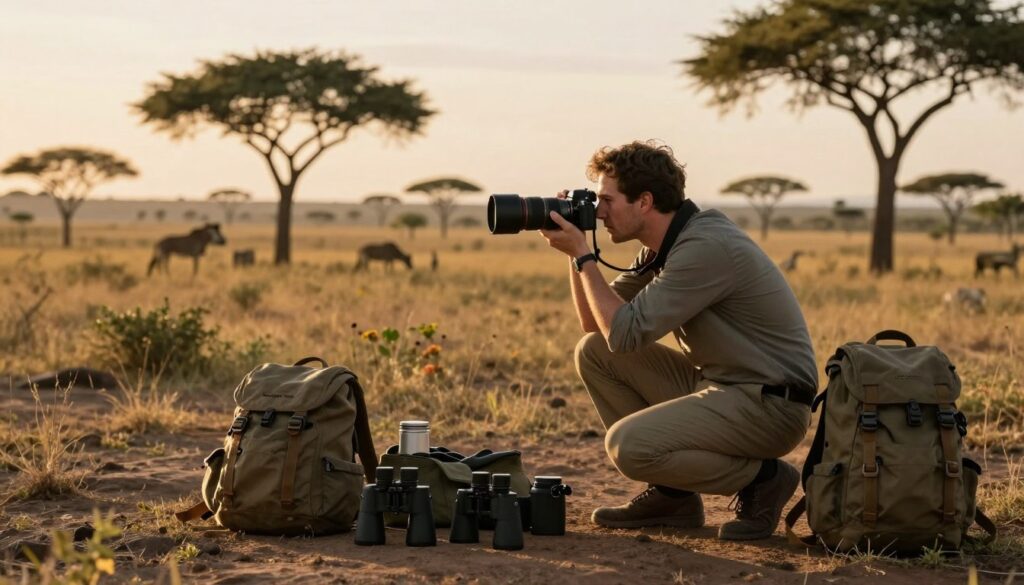
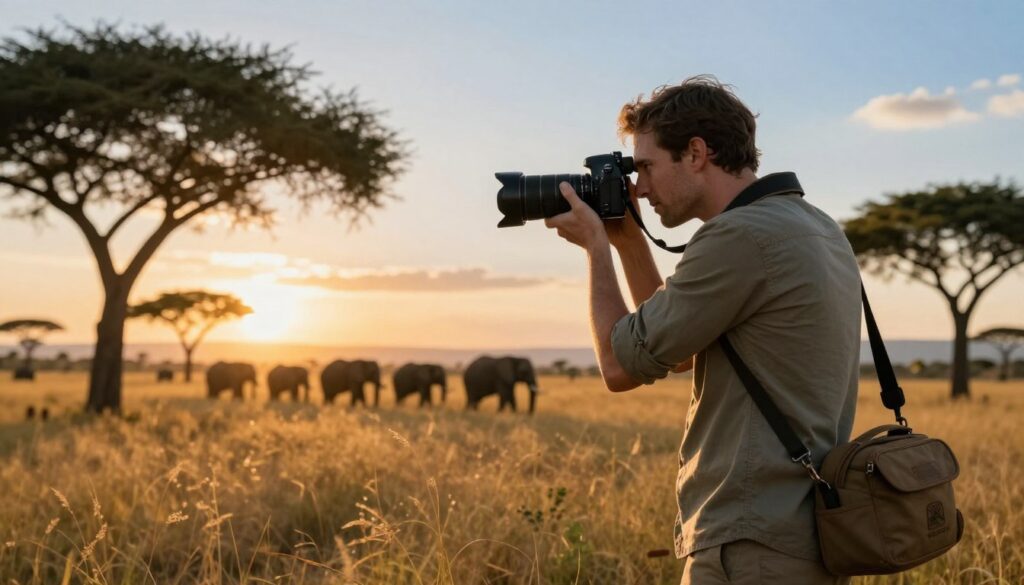
Your journey represents a significant investment of resources and precious time. Thorough preparation is the key to maximizing both your artistic results and your overall experience. It transforms potential frustration into fluid, confident action when the perfect scene unfolds.
We advise beginning this process at least three months before your departure. This window allows you to deeply research seasons and animal behaviors. It also provides adequate time to acquire and practice with any new camera gear.
True readiness extends beyond equipment. Physical stamina for long days and mental acceptance of nature’s unpredictable rhythm are equally vital. Embrace preparation as a holistic practice.
| Common Mindset | Prepared Approach | Impact on Your Trip |
|---|---|---|
| Last-minute packing | Checklists reviewed weeks ahead | Reduced stress, nothing forgotten |
| Unrealistic expectations | Informed by destination research | Greater appreciation for each moment |
| Focus only on gear | Holistic physical and mental readiness | Enhanced endurance and enjoyment |
This foundational work ensures you arrive not as a tourist, but as a receptive participant ready to engage deeply with the landscape. It is the first step in a profound artistic dialogue.
Research and Planning: Know Your Safari Destination
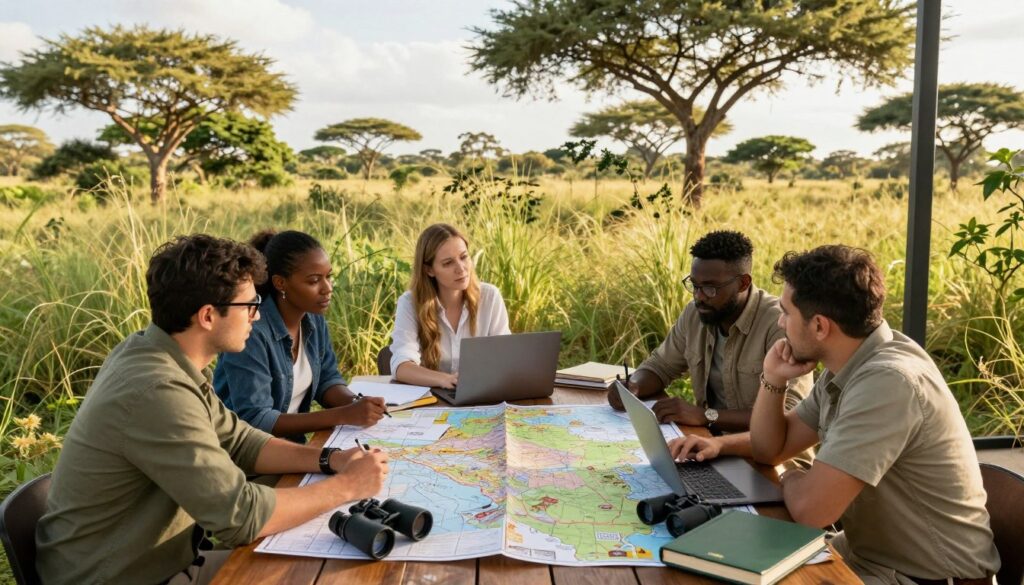
Your most powerful photographic tool arrives with you: not your camera, but the knowledge gained through thoughtful destination research. This invisible foundation transforms random encounters into purposeful expeditions that consistently deliver exceptional opportunities.
Choosing a Tour Company
Selecting the right partner determines the quality of your entire experience. At Kisangara Tours, our guides possess intimate knowledge of Tanzania’s ecosystems and animal behavior patterns. They know the precise locations where extraordinary moments unfold.
Professional guides maintain constant communication across the parks. This network ensures when something remarkable happens, you’ll be positioned to witness it. Our team understands that photography demands different considerations than standard trips.
“A great guide doesn’t just find animals; they read the landscape’s subtle language and position you for the perfect moment.”
| Standard Planning | Informed Approach | Photographic Outcome |
|---|---|---|
| General wildlife viewing | Species-specific behavior research | Anticipated action shots |
| Fixed itinerary | Flexibility for golden hour light | Dramatically lit scenes |
| Random timing | Migration pattern alignment | Spectacular event coverage |
Understanding Local Weather and Light Conditions
Light conditions dictate image quality more than almost any other factor. The golden hours following dawn and preceding dusk bathe the savanna in warm, directional light. This transforms ordinary scenes into extraordinary photographs.
Understanding local weather patterns proves essential. Tanzania’s dry season (June-October) offers excellent visibility. The green season brings dramatic skies and newborn animals. Each time of year offers unique advantages for your trip.
Our expeditions are structured around optimal lighting windows. Early morning drives begin before sunrise. Afternoon drives extend into twilight’s magical moments. Planning your safari timing around wildlife patterns dramatically increases your chances.
For the best safari experience tailored to your vision, contact us at +255 755 002 886 or +255 783 292 929. Email info@kisangaratours.com to discuss how our expertise can enhance your journey.
Selecting and Preparing Your Gear for Safari
The tools you carry into the wilderness are not mere instruments, but partners in your quest to capture nature’s fleeting poetry. Your choices here determine how deeply you can engage with the wild moments unfolding before you.
Cameras and Lenses
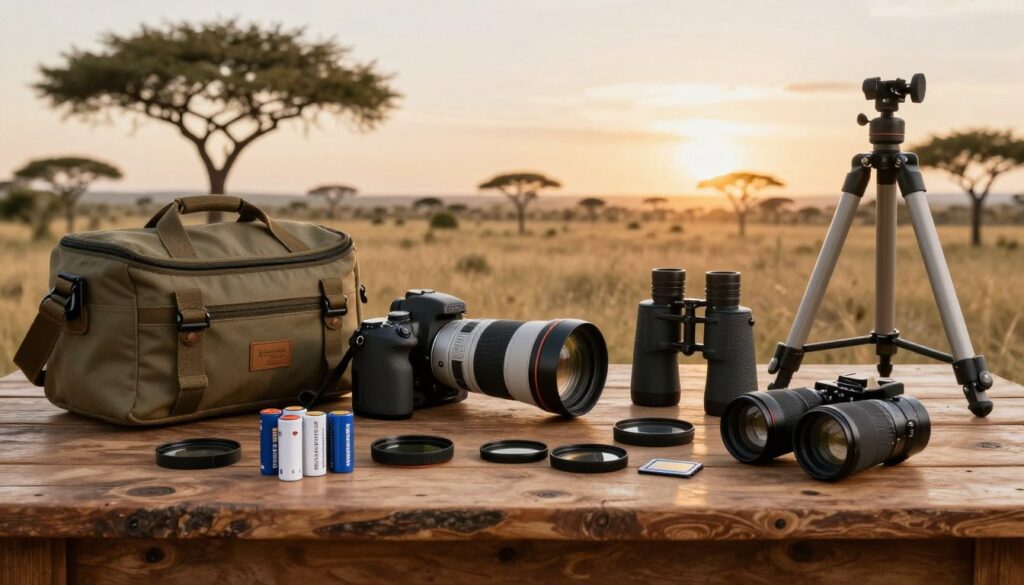
We’ve learned that carrying two camera bodies transforms your experience. Each camera should bear a different lens, ready for sudden action without the risky dance of lens changes.
The African bush breathes dust into everything. Changing lenses invites particles onto your sensor. A 300-400mm camera lens proves ideal for respectful distance from wildlife.
This dual-camera approach keeps your focus on the moment, not equipment maintenance. It represents the best camera strategy for fluid, responsive creation.
Memory Cards, Batteries, and Backup Solutions
Your memory strategy should favor multiple smaller cards over few large ones. If one memory card fails, you preserve most of your work.
Bring 2-4 batteries per camera. Sync date and time across all cameras before your first drive. This ensures chronological order when reviewing your collection.
Backup solutions are non-negotiable. Protect your images as you would protect the wilderness itself—with foresight and reverence.
Mastering Camera Settings on Safari
Before the first lion’s roar echoes across the savanna, a silent mastery of your equipment must already reside within your hands. This intimate knowledge transforms your camera from a complex machine into an intuitive extension of your vision.
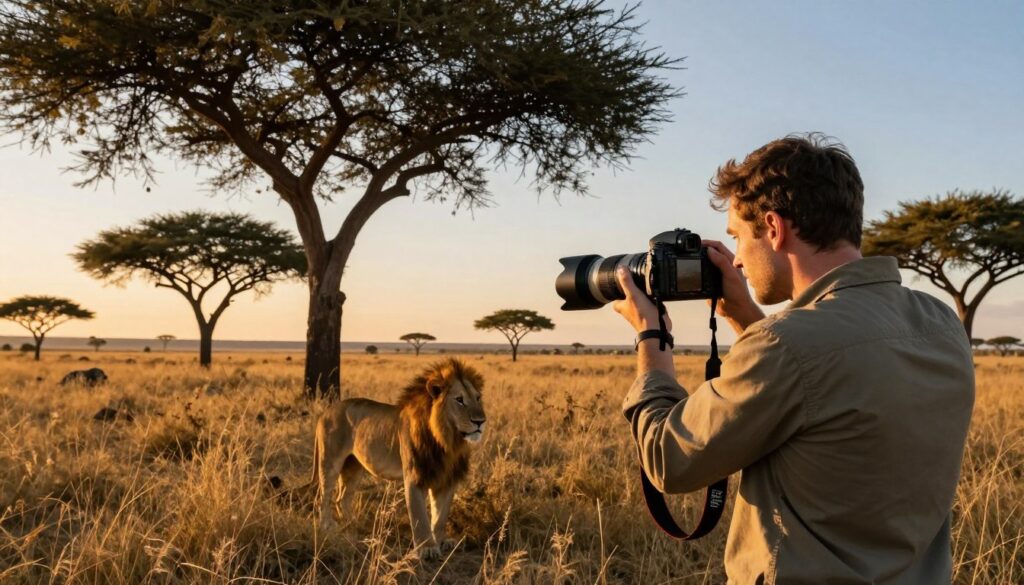
We have seen the magic that unfolds when artists arrive prepared. They capture the split-second glance, the powerful leap, while others fumble with dials. Your focus should be on the moment, not the menu.
Optimal Shutter Speeds and Shooting Modes
Shutter speed is your most vital ally against motion. To freeze a cheetah’s sprint or a bird’s flight, we recommend a speed of 1/1000 second or faster. This also counteracts the subtle shake of your vehicle.
Engage your camera‘s continuous autofocus (AI Servo/AF-C). This mode tirelessly tracks moving animals, keeping them sharp. Pair this with high-speed continuous shooting (burst mode).
Wildlife action is a fleeting sequence. Capturing multiple shots per second ensures you seize the perfect wing position or facial expression hidden within the movement.
Why Shooting in RAW Matters
Choosing RAW format is a decision for future flexibility. This file type preserves immense detail in shadows and highlights. It allows you to rescue images from challenging light during editing.
We teach a technique called “shooting through the moment.” Begin pressing the shutter before the peak action and continue after. The moments of anticipation or conclusion often hold the deepest story.
Aperture selection leans toward wider openings like f/4. This isolates your subject with a soft background. Set your ISO to Auto with a sensible limit, letting the camera adapt to changing light while maintaining your chosen shutter speed.
Remember, a slightly soft image of extraordinary behavior surpasses a technically perfect shot of a sleeping animal. The soul of the moment matters most.
| Common Practice | Masterful Approach | Visual Result |
|---|---|---|
| Single shots at peak action | Burst mode through the entire sequence | Narrative depth and unique moments |
| JPEG for simplicity | RAW for editing potential | Recoverable highlights and rich colors |
| Manual ISO control | Auto ISO with upper limit | Consistent exposure in variable light |
Understanding Composition and Lighting in the Wild
There exists a moment when technical skill surrenders to artistic vision: when composition and light conspire to reveal not just an animal, but its spirit within the landscape. This alchemy transforms a simple record into a story that breathes.
We have watched countless frames evolve from documentation to art. The principles guiding this transformation are universal. They rely on perception, not expensive gear.
Chasing the Light at Dawn and Dusk
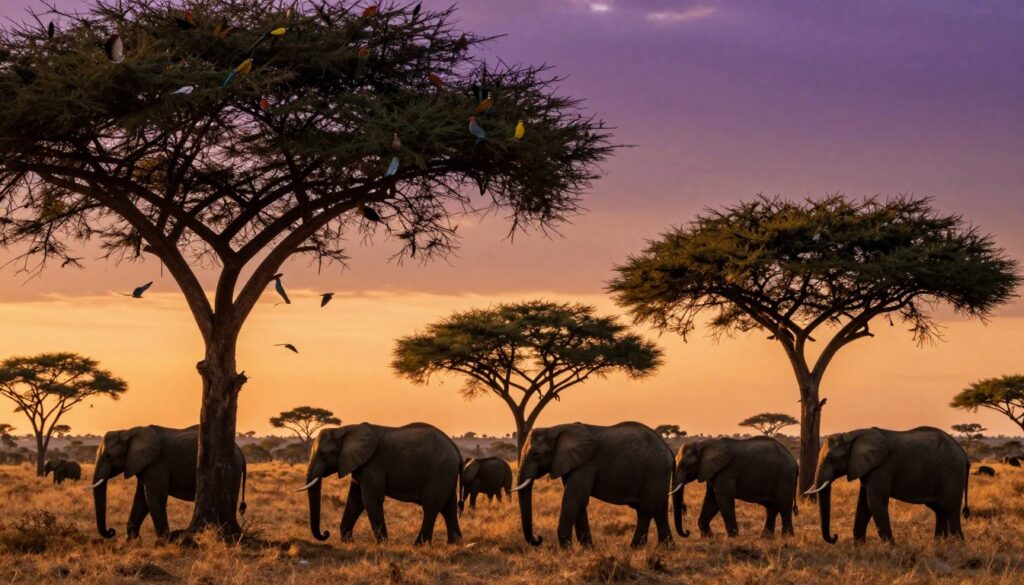
The African sun performs its most dramatic work at the day’s edges. The low-angled light of dawn and dusk wraps the savanna in gold. It carves long shadows that give the land a beautiful, three-dimensional form.
This magical light softens textures and enriches colors. It offers opportunities for breathtaking silhouettes. A distant elephant bathed in this glow tells a richer story than any midday close-up.
Angles, Perspectives, and the Rule of Thirds
How you frame your subject dictates the emotional pull of your image. The rule of thirds provides a powerful starting point. Imagine a grid over your viewfinder and place key elements where the lines intersect.
This creates dynamic tension far superior to a centered shot. Before you press the shutter, scan the entire frame. Check for distracting branches or cluttered backgrounds that steal focus from your story.
Vary your perspective. Sometimes, pulling back to show an animal in its vast habitat communicates more than a tight portrait. It reveals the creature’s true context and the ecosystem’s grandeur.
| Common Approach | Artistic Method | Impact on the Final Image |
|---|---|---|
| Centering the subject | Using the rule of thirds | Creates visual interest and balance |
| Shooting only at midday | Prioritizing golden hour light | Yields warm, dimensional, dramatic scenes |
| Focusing solely on close-ups | Incorporating environmental context | Tells a deeper, more authentic story |
Advanced Techniques for Capturing Action and Movement
The wilderness holds its breath in the moments before motion erupts—a suspended tension where anticipation becomes your greatest asset. This is the sacred dialogue between stillness and explosion, where technical mastery meets instinct.
We have learned that the most powerful wildlife photography emerges from this poised readiness. It transforms a simple shot into a story that pulses with life.
Continuous Shooting and Focusing on the Eyes
Your camera’s burst mode is the brush for painting motion’s fleeting poetry. Keep your finger on the shutter to capture the entire sequence of action.
This technique ensures you seize the perfect wingbeat or the subtle shift in a predator’s gaze. Reviewing these sequences later often reveals the most expressive photos.
Your primary focus must always be the eyes. Sharp eyes create an immediate connection, even if other parts of the animals show motion.
Use a wider aperture like f/4. This isolates your subject and allows for a faster shutter speed. It freezes the movement of dynamic wildlife beautifully.
Learn to read the land’s subtle cues. A twitch of an ear or a focused stare often precedes dramatic action. This foresight lets you begin shooting before the peak moment.
True mastery in this photography comes from feeling the rhythm of the wild. It is about capturing the soul of the movement, not just the shot.
Overcoming Environmental Challenges on Safari
Beyond the golden light and majestic animals lies a landscape of subtle adversaries that can quietly undermine your photographic journey if left unaddressed. The wilderness tests both your spirit and your equipment with elemental challenges.
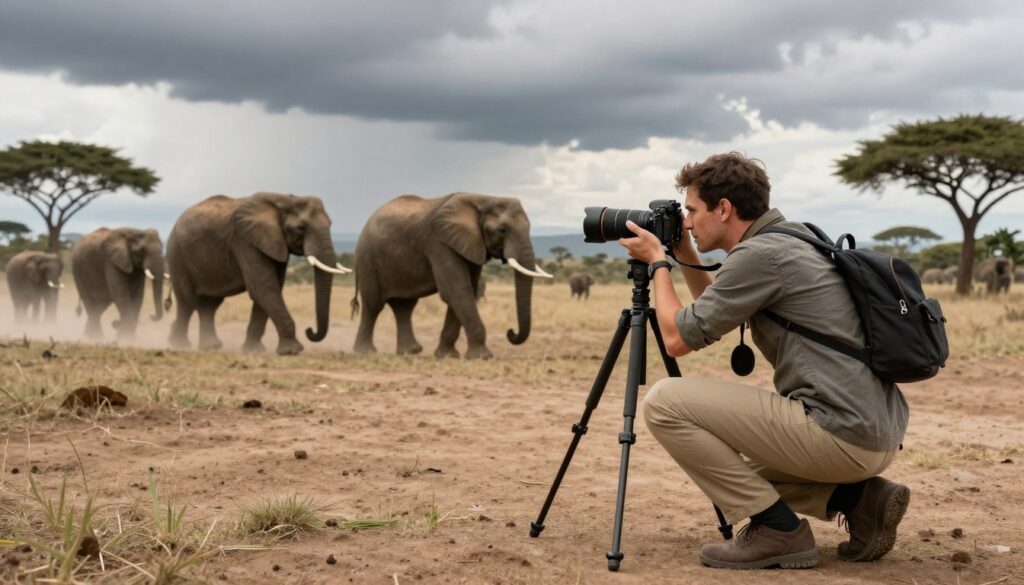
Dust represents the most persistent challenge. Fine particles infiltrate every opening, coating lenses and settling on sensors. This creates dark spots that mar your images. We recommend simple protective measures like pillow covers for cameras resting in the vehicle.
Vigilance becomes essential when your vehicle navigates rough terrain. Expensive lenses can tumble from seats with a sickening thud. Always keep your gear secure during transit.
Never change lenses while the vehicle moves. Looking down at your camera ensures you’ll miss the inevitable bump ahead. This can damage mounts or permanently jam equipment.
Temperature fluctuations between cool mornings and hot afternoons cause condensation. Allow your camera time to acclimate gradually between temperature zones.
Vibration from rough roads can loosen settings and connections. Periodic equipment checks prevent lost opportunities from gear that shakes itself into malfunction.
Bring a basic cleaning kit: lens solution, microfiber cloths, and a rocket blower. This maintains equipment cleanliness throughout your day.
Despite best efforts, some dust infiltration is inevitable. Accepting this reality reduces stress. It allows you to focus on the experience rather than obsessing over pristine equipment.
Stabilization and Support Techniques for In-Vehicle Photography
Within the gentle sway of our vehicle, a subtle dance begins between stability and motion—where the steadiness of your hands determines the clarity of your vision. The challenge of capturing sharp images from a moving platform requires both technical wisdom and intuitive adaptation.
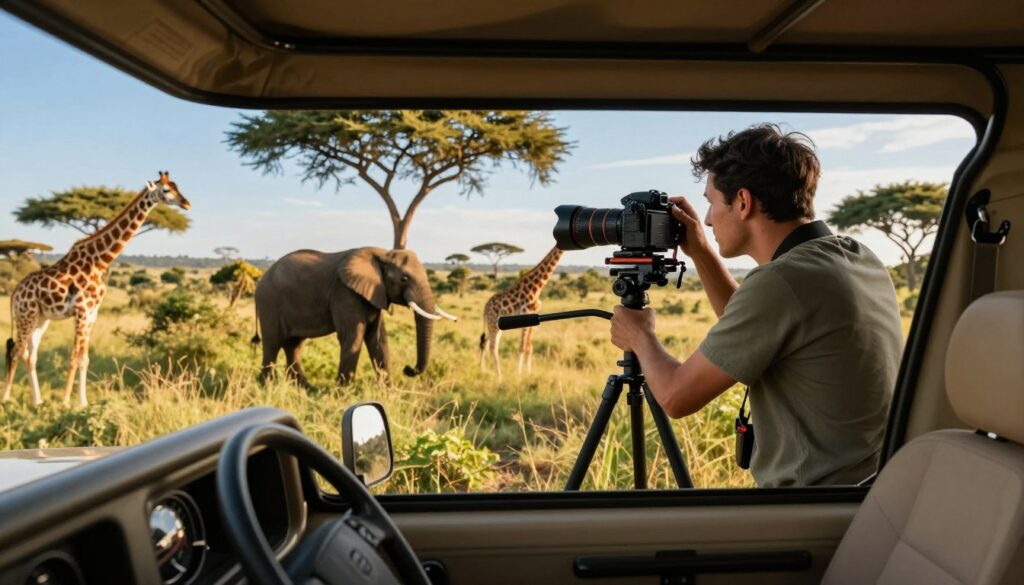
We’ve learned that traditional tripods become impractical companions in this environment. Safety restrictions prevent their use outside the vehicle, while inside they consume precious space and limit your mobility. The confined quarters demand more flexible solutions.
Using Beanbags and Alternative Supports
The humble beanbag emerges as our most trusted ally for this delicate work. It molds perfectly around your lens, creating a custom cradle that absorbs vehicle vibrations. This simple tool transforms shaky possibilities into crisp, clear captures.
We recommend bringing an empty beanbag to avoid baggage weight concerns. Fill it with local rice or beans upon arrival. Nestle your camera lens deeply into the bag’s embrace rather than merely resting it on top.
For those seeking alternative options, window clamps with ball heads provide stable platforms. They excel at smooth panning shots but require more setup time. Some photographers prefer handheld shooting, relying on modern stabilization technology and high shutter speeds.
Your body positioning contributes significantly to stability. Brace your elbows against your torso and control your breathing. Many of our vehicles come equipped with beanbags, but confirming this detail ensures you’re prepared.
Tips for Post-Safari Photo Selection and Editing
The true artistry of a safari expedition often reveals itself not in the field, but in the quiet contemplation that follows. This is where hundreds of captured moments transform into a coherent visual story.
You will return with a treasure trove of photos. The nature of wildlife shooting means you likely have many similar images. Presenting twenty-seven frames of the same elephant bores viewers.
Culling Your Shots Effectively
This process demands ruthless honesty. One artist captured 900 images during a week-long journey. After culling, only 80 photos remained for presentation.
Quality consistently triumphs over quantity. A tight selection of fifty exceptional photos communicates more powerfully than hundreds of mediocre ones. Your audience will appreciate the curation.
At the end of each day, back up your files and format memory cards. This protects your work and prepares for fresh shooting. It is a crucial ritual.
Editing software like Lightroom gives your final images that extra polish. Adjust exposure and enhance colors subtly. The goal is to elevate authenticity, not create unrealistic results.
Your curated collection should tell a compelling story. This careful selection ensures people anticipate your next adventure. They will not dread a marathon viewing session.
Safety First: Respect for Wildlife and Personal Security
The most profound images emerge not from intrusion, but from silent reverence. We approach these encounters as temporary guests in an ancient domain where wildlife dictates the rhythm of each moment.
Every animal you encounter remains wild and unpredictable. A resting lion may appear peaceful, but possesses instincts refined over millennia. Your safety depends on recognizing that no photograph justifies risking harm.
Our guide‘s instructions form your protective shield. They read subtle cues in animal behavior that untrained eyes might miss. Following their guidance without exception ensures everyone’s wellbeing.
Ethical observation means patience over provocation. Never whistle or make noise to awaken sleeping animals. Such harassment stresses wildlife and violates the sacred trust of witnessing.
Respect extends to fellow travelers sharing this experience. Limit vehicle time at popular sightings so other people can create their own memories. This consideration makes the safari better for all visitors.
We believe photographs born from ethical observation carry authentic power. They capture the true spirit of wildlife rather than manipulated scenes. This approach honors the animals and preserves wilderness integrity.
As guides, we make sure every encounter respects natural behaviors. This part of our responsibility ensures people and animals coexist harmoniously during your safari journey.
Leveraging Real-Life Experiences from Past Expeditions
Each journey into the wild writes its own curriculum. The most valuable lessons emerge from unpredictable moments that theory cannot anticipate.
We recall one photographer who arrived with modest equipment but exceptional vision. His images captured the soul of the wilderness more powerfully than any technical perfection could achieve. This reinforced our belief that artistic eye trumps equipment specifications.
Morning game drives beginning before sunrise reward the committed with magical moments. The sun breaks over the plains in colors that exist nowhere else. Animals emerge from night’s mysteries into day’s possibilities during these precious hours.
One memorable expedition saw a photographer capture 900 frames. Through ruthless editing, only 80 final images remained. This discipline ensures every shared photograph represents genuine quality rather than diluting strong work with filler.
The most powerful images often emerge from authentic emotional connection. When you’re so moved by what you’re witnessing, your work becomes an expression of reverence. This transformative quality makes each trip uniquely unrepeatable.
We witness photographers develop deeper ecological awareness and patience. They return home not just with photos, but with a profound connection to the natural world that influences their craft forever.
Networking with Wildlife Photographers and Guides
True mastery in capturing wild moments blossoms not in isolation, but through the rich exchange of perspectives among those who share this sacred pursuit. The connections you forge become invisible threads weaving through your entire journey.
Our guides represent generations of accumulated wisdom about Tanzania’s ecosystems. They maintain constant radio contact across the parks, creating a living network that positions you for extraordinary opportunities. When something remarkable unfolds, your guide will be among the first to know.
Innovative wildlife photographers like Johan Siggesson challenge conventional approaches. His wide-angle techniques reveal animals within their environmental context rather than isolated close-ups. This fresh perspective can transform how you see familiar subjects.
Building relationships with fellow people passionate about wildlife creates mutual understanding. When guides recognize your serious commitment, they become active collaborators in your creative vision. These connections often evolve into lasting friendships that enrich return visits.
The global community of photographers shares knowledge generously through various platforms. Engaging with this network before, during, and after your safari accelerates your learning. It connects you with like-minded individuals who understand the profound beauty of this photography journey.
We offer subtle tips for meaningful networking: listen more than you speak, share your final images with your guide, and remain open to different creative approaches. Each connection becomes a doorway to deeper understanding.
Get in Touch: Contact Kisangara Tours
We stand ready as your bridge between imagination and reality, where your vision for the perfect wilderness experience meets our deep-rooted expertise. Your journey toward capturing authentic moments begins with this meaningful connection.
Call Us: +255 755 002 886 | +255 783 292 929
Reach us directly to discuss your ideal trip. Our team understands the specific rhythms that create extraordinary photographic opportunities. We’ll help shape an itinerary aligned with your creative goals.
Whether planning your first expedition or returning to deepen your craft, our guides become partners in your vision. They position you for moments that transcend ordinary wildlife viewing.
Email: info@kisangaratours.com | kisangaratours@gmail.com
Share your aspirations through detailed correspondence. Describe your experience level, equipment, and specific interests. We provide honest assessments of seasonal possibilities.
Our commitment extends beyond logistics. We become collaborators in creating transformative experiences that honor both your ambitions and the sacred landscapes we steward.
| Standard Planning | Our Collaborative Approach | Your Experience |
|---|---|---|
| Generic itinerary | Custom-designed for your vision | Personalized creative journey |
| Fixed schedules | Flexibility for perfect light | Optimal shooting conditions |
| Basic wildlife viewing | Photography-focused positioning | Authentic storytelling moments |
Contact us today to begin planning your best safari experience. Let us help transform your dreams into a profound journey that will resonate for years.
Conclusion
The final frame of your adventure is not the last photograph, but the lasting imprint on your soul. These safari photography tips represent more than technical guidance—they are an invitation to approach wildlife photography with reverence and presence.
Your trip will challenge you to balance technical skill with artistic vision. At the end of each day, remember that the experience itself holds greater value than any single image. Make sure to savor every moment as an essential part of your transformation.
The photos you bring home will tell the complete story of your journey. They capture not just animals, but the overwhelming beauty and emotional connections that define true safari photography.
As you continue to get better at your craft, remember that growth comes through practice. We look forward to helping you create wildlife images that honor Tanzania’s extraordinary landscapes and the profound journey of seeing with new eyes.
FAQ
What is the single most important piece of gear for wildlife photography on safari?
While your camera body is vital, the lens is truly the soul of your kit. A versatile telephoto lens, like a 100-400mm or 200-500mm, brings distant animals intimately close, allowing you to capture the subtle light in a leopard’s eyes or the dust kicked up by a running herd.
How can I prevent dust from damaging my equipment in the dry season?
The African dust is a fine, pervasive powder. We recommend carrying a rocket blower and soft microfiber cloths. Only change lenses inside your vehicle with windows closed, and use protective UV filters on your glass. At the end of each day, a gentle cleaning ritual preserves your gear for the next morning’s magic.
What is the best camera setting to freeze the motion of a running animal?
For sharp action shots, a fast shutter speed is your greatest ally. We suggest starting at 1/1000th of a second or faster. Use Shutter Priority mode (Tv or S) and set your camera to continuous high-speed drive and AI Servo autofocus to track movement seamlessly.
Why should I shoot in RAW format instead of JPEG?
RAW files are like unprocessed memories, holding all the light and data your camera sensor captures. This gives you immense flexibility in post-processing to recover details from shadows or highlights, ensuring your final wildlife images reflect the true drama of the scene.
How do I get better images from inside a safari vehicle?
Stabilization is key. We always provide beanbags—a simple, brilliant tool that molds to the vehicle’s window frame, creating a steady platform for your long lens. Turn off your vehicle’s image stabilization when using this support, and remember to breathe gently as you press the shutter.
What time of day offers the best light for photography?
The golden hours—just after sunrise and before sunset—bathe the landscape in a warm, soft, directional light that adds depth and emotion to your photos. This is when animals are most active, and the low angle creates long shadows and beautiful textures, transforming ordinary scenes into extraordinary wildlife images.