The Great Migration: Where do wildebeest migrate to? Expert Insights
Across the vast plains of East Africa, a timeless drama unfolds. It is one of the planet’s last great wildlife spectacles: the great wildebeest migration. This ancient journey captivates the human spirit, a powerful reminder of nature’s untamed rhythms.

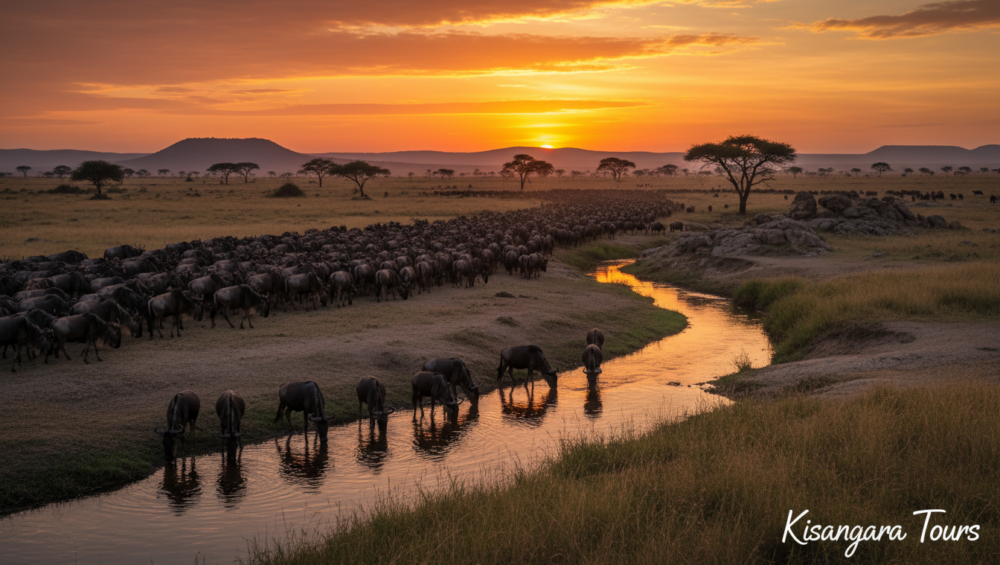
We have witnessed this circular odyssey for years. Nearly two million souls traverse the Serengeti-Mara ecosystem. Their path is an eternal search for life-giving rain and fresh grasses.
This movement is more than a simple animal trek. It is the very heartbeat of Africa. The precise timing remains a beautiful mystery, guided by instinct and weather.
Our journey together begins here. We offer expert insights drawn from a deep connection to this land. We will guide you to understand the destinations of this incredible wildebeest migration.
Key Takeaways
- The Great Wildebeest Migration is a massive, year-long movement of approximately two million animals.
- This epic journey is a circular route between Tanzania’s Serengeti and Kenya’s Masai Mara.
- The driving force behind the migration is the search for fresh grazing land and water.
- Timing is unpredictable, governed by seasonal rains and ancient instincts.
- Witnessing this event is a transformative experience, connecting you to a primordial wilderness.
- Expert guidance is essential for planning a successful safari to see this natural wonder.
Introduction to the Great Migration
An ancient clockwork of nature turns with the seasons, guided by ancestral memory. This great wildebeest migration represents one of Earth’s last great terrestrial wildlife movements. We stand in awe of this phenomenon that has persisted for millennia.

Overview of the Phenomenon
The great migration encompasses an entire community of nearly two million animals moving as one breathing organism. This includes 200,000 zebra and countless antelope species traveling together in symbiotic harmony.
Their clockwise pilgrimage follows routes imprinted in ancestral memory. The movement crosses international borders that mean nothing to hooves driven by survival.
| Species | Approximate Numbers | Ecological Role |
|---|---|---|
| Wildebeest | 1.5-2 million | Primary grazers, soil fertilizers |
| Zebra | 200,000 | Complementary grazers, alert systems |
| Antelope Species | Thousands | Diverse herbivores, ecosystem balance |
| Following Predators | ~3,000 lions | Population control, natural selection |
Historical and Ecological Significance
The Serengeti ecosystem is the world’s oldest living laboratory. Here, evolution has crafted intricate relationships that maintain perfect balance.
Zebra and wildebeest travel together because they graze different vegetation layers. This creates harmony across the plains while maximizing resource use.
The ecological impact is profound. These herds leave behind 60,000 tons of dung that enriches the soil. Approximately 3,000 lions follow the migration, maintaining the eternal dance of predator and prey.
Protecting these unfenced wildernesses in Tanzania’s Serengeti National Park and Kenya’s Masai Mara represents humanity’s commitment to preservation. Here, nature still orchestrates its own grand symphony.
Understanding “Where do wildebeest migrate to?”
The path of the herds is a living river, flowing not by gravity but by an ancient, internal compass. To ask where they are going is to seek a fixed point on a map that does not exist. Their destination is simply: life itself.
Migratory Destinations Explained
This great movement traces a colossal circle across the Serengeti Masai Mara ecosystem. The animals journey through Tanzania’s Serengeti National Park, the Ngorongoro Conservation Area, and the Grumeti Reserve.
Their trek then pushes north into Kenya’s legendary Masai Mara. These are not single locations but vast, seasonal stages. Each area provides crucial resources at a specific time of year.

Key Factors Influencing Their Journey
Rainfall is the ultimate conductor. It triggers the growth of fresh, nutrient-rich grass that pulls the herds forward. Their movement is a direct response to the weather.
We believe their navigation is profound. Older animals may sense distant thunderstorms. This guides them toward water sources over 30 miles away.
The journey between Tanzania and Kenya is a testament to survival. It is a purposeful search for sustenance and safety, written in the language of the land.
The Serengeti and Masai Mara: Migration Route Explained
The land itself breathes with the rhythm of hooves, a sacred geography etched by generations. This clockwise pilgrimage through the Serengeti Masai Mara ecosystem follows ancient paths of survival.

Route Dynamics Between Tanzania and Kenya
We trace the journey from Tanzania’s southern plains where new life begins. The herds then arc northwest through the central Serengeti‘s iconic kopjes. Each landscape offers distinct grasses and challenges.
The northern Serengeti becomes a dramatic staging ground. Here, the migration faces its ultimate test at river crossings before reaching Kenya’s Masai Mara. This is not one massive movement but many smaller herds traveling together.
The Serengeti National Park remains beautifully unfenced. Animals move freely where they find grazing, creating multiple crossing points. Understanding these dynamics helps us position travelers at strategic locations throughout the cycle.
This route encompasses vast wilderness where nature’s drama unfolds across seasons. The Serengeti National Park blends seamlessly with conservation areas, preserving this eternal journey.
Seasonal Dynamics and Timing of the Migration
Each season paints a different masterpiece across the savanna, with the herds as its living brushstrokes. Many people think this great spectacle only takes place during dramatic river crossings. In truth, the movement continues throughout the entire year.

Event Timeline from Calving to River Crossings
The annual cycle begins with February’s calving season. Over 8,000 newborns arrive daily in the southern Serengeti. This synchronous birth overwhelms predators with abundance.
April brings the rutting season’s intense competition. Males clash for mating rights across the plains. Their grunting calls announce the creation of next year’s generation.
By May, herds move northward toward river crossings. These dramatic events peak from July through August. Yet their precise timing remains beautifully unpredictable.
Impact of Rainfall and Weather Patterns
Rainfall governs every aspect of this journey. The short rains of November summon animals southward. The long rains of April push them north again.
Climate change has disrupted once-reliable patterns. Rains arrive early or late, shifting the entire calendar. This demands flexible safari planning with adequate time.
Each time of year offers unique spectacles across the Serengeti Masai ecosystem. Understanding these seasonal dynamics helps travelers align expectations with nature’s authentic rhythm.
River Crossings: The Heart of the Migration
At the river’s edge, a primal tension grips the air: the moment of decision between life and the unknown. This is the climax of the great movement, where the journey’s abstract perils become terrifyingly real.

We have learned to read the signs of an impending event. Thousands of animals gather on high banks, their collective energy a palpable force. Yet the exact moment of the river crossing remains a beautiful mystery, even to them.
Challenges at the Mara and Grumeti Rivers
The Mara River presents the ultimate test. Herds may wait for days or plunge in immediately. This unpredictability defines the spectacle.
Each crossing point offers a different drama. We guide travelers to locations that match their hopes.
| Crossing Point | Key Feature | Best For |
|---|---|---|
| Serena Crossing | Steep, dramatic riverbanks | Heart-stopping action |
| Lookout Hill | Elevated, panoramic views | Capturing the full scale |
| Paradise Plains | Open, photogenic landscape | Iconic wildlife photography |
Dangers lurk beyond the famous Nile crocodiles. Steep, muddy banks cause fatal pile-ups. Strong currents separate families.
The Grumeti River crossings in the Serengeti National Park offer a earlier, equally intense chapter. Witnessing these river crossings requires patience. But the reward is a memory etched forever: raw nature in its most powerful form.
Life Cycle Events and Calving Season
When February arrives, the volcanic plains transform into nature’s grandest nursery. This calving season represents the migration’s most profound renewal. We witness over 8,000 new lives emerging daily across the southern Serengeti.

The spectacle unfolds with raw intensity. Wobbly-legged calves must stand within minutes or face certain death. Their mothers nudge them urgently toward mobility.
Calving Peaks and Predator Encounters
This synchronous birthing strategy overwhelms predators with abundance. While big cats and hyena clans feast, most calves survive those critical first days. The evolutionary genius ensures the herd’s continuity.
The southern Serengeti’s volcanic soils produce nutrient-rich grasses. This provides essential minerals for nursing mothers. The location demonstrates nature’s perfect design.
| Predator Species | Hunting Strategy | Success Rate During Calving |
|---|---|---|
| Lions | Coordinated group attacks | Significantly increased |
| Cheetahs | Speed-based single pursuit | Peak opportunity period |
| Hyenas | Opportunistic scavenging | Maximum food availability |
By March, the young grow stronger on the rich plains. Those born early face the longest journey ahead. The herds begin their northward movement by May.
To see wildebeest during this season connects travelers to life’s fundamental cycles. While river crossings draw crowds, calving reveals the migration’s heart: relentless renewal against all odds.
Tracking the Herd: Tools and Techniques
Technology now dances with ancient instinct across the savanna, creating new pathways to witness nature’s grandest spectacle. This great migration follows ancestral routes with remarkable consistency throughout the year. Yet predicting exact locations at any given time remains beautifully challenging.

Modern Herdtracker Apps and Forecasting
The Herdtracker app represents a technological solution to an age-old question. Developed by safari specialists, it combines satellite data with real-time field reports. This creates unprecedented accuracy for safari planning.
Forecasting blends traditional knowledge with modern innovation. Maasai guides share generations of tracking wisdom. This complements aerial surveys and weather modeling.
Even with sophisticated tools, flexibility remains essential. The herds operate on nature’s schedule, not human calendars. They may linger in areas with excellent grazing or rush toward distant rains.
Consult monthly predictions before booking your safari. Then refine plans using updated tracking information. This approach maximizes your chances to see great wildlife moments during the right time of year.
Embrace the beautiful uncertainty of this wildebeest migration. While tracking tools provide valuable guidance, the wilderness always maintains its mysterious rhythm. This unpredictability makes encountering the migration truly transformative.
Safari Experiences: Accommodations and Tours
Your safari experience begins with a fundamental choice: to move with the herds or to anchor in comfort. This decision shapes your entire journey through the wilderness.

Mobile Camps versus Permanent Lodges
Mobile camps represent the purest form of migration safari. They follow the herds’ path, placing you at the epicenter of action. These seasonal tents offer flush toilets but often feature bucket showers and solar power.
Permanent lodges provide different comforts. They offer hot running water, reliable electricity, and consistent amenities. These structures serve as comfortable bases for exploring the Masai Mara and Serengeti National Park.
| Feature | Mobile Camps | Permanent Lodges |
|---|---|---|
| Water System | Bucket showers, jug water | Hot running water, plumbed showers |
| Power Source | Solar/generator, communal charging | Reliable electricity, in-room charging |
| Wi-Fi Availability | Minimal or none | Usually available |
| Location Strategy | Moves with migration | Fixed strategic locations |
Recommended Safari Tours and Itineraries
Our curated great migration safari options span various durations. Ten-day journeys follow the herds year-round. Thirteen-day expeditions combine wildlife viewing with cultural experiences.
We recommend booking your best safari at least one year in advance. This ensures availability during peak river-crossing season. Choosing good-value accommodations can extend your time on safari.
Families with young children should consider fenced camps for safety. Longer stays increase your chances to see great wildlife events during this remarkable wildebeest migration.
Expert Tips for Planning Your Migration Safari
Your encounter with the herds begins long before you set foot on African soil, in the quiet moments of preparation. We share wisdom gathered from decades of positioning travelers for transformative encounters.

Booking Strategies and Early Reservations
Secure your migration safari at least one year in advance. Prime accommodations near the Mara River fill completely during peak time from June through October.
Your booking strategy should match your dreams. Choose your time of year based on the spectacle you wish to see.
Practical Advice for an Unpredictable Journey
Plan for as much time as possible. The herds operate on nature’s schedule. More days dramatically increase your chances.
We recommend the private conservancies adjoining the Masai Mara. They offer exclusivity and unique activities.
| Experience | Private Conservancy | National Park |
|---|---|---|
| Vehicle Crowds | Fewer vehicles, intimate viewing | Can be crowded at crossings |
| Allowed Activities | Night drives, bush walks | Strictly regulated game drives |
| Overall Atmosphere | Exclusive, tranquil | Iconic, sometimes busy |
Diversify your journey. End your safari at camps away from the herds for tranquil Big Five viewing.
Pack warm layers for early drives in the northern Serengeti. Temperatures can drop surprisingly low.
For expert planning assistance, reach Kisangara Tours at +255 755 002 886 or info@kisangaratours.com. Let us guide you to the right place at the right time.
Conclusion
In the great stillness after the herds have passed, the land holds its breath, waiting for the cycle to begin anew. This eternal rhythm reminds us that wilderness still governs its own destiny.
The great wildebeest migration represents more than spectacle. It reveals nature’s profound wisdom. Planning your safari requires embracing beautiful uncertainty.
Each season offers unique rewards across the Serengeti Masai ecosystem. From calving grounds to river crossings, the journey continues through the year.
Now is the time to witness this living wonder. Climate change makes each passing year more precious. The experience transcends ordinary travel.
Let us guide you to the perfect place at the right time. Contact Kisangara Tours to begin your transformative journey.
Give us a call at +255 755 002 886 or +255 783 292 929. Email us at info@kisangaratours.com and kisangaratours@gmail.com.
FAQ
What is the best time of year to see the Great Migration?
The best time depends on the spectacle you wish to witness. For the dramatic river crossings in the northern Serengeti and Masai Mara, aim for July through October. To experience the heartwarming calving season in the southern Serengeti plains, plan your visit for late January to February. The movement of the herds is a fluid dance with the rains, so timing is an art we help you master.
Where does the Great Wildebeest Migration take place?
This epic journey unfolds across the vast plains of the Serengeti National Park in Tanzania and the Masai Mara National Reserve in Kenya. The herds traverse an ancient, circular route, a timeless pilgrimage dictated by the search for fresh grazing and water. We guide you to the precise locations where this great wildebeest migration spectacle is most alive.
Is it better to stay in a mobile camp or a permanent lodge for a migration safari?
Mobile camps offer an unparalleled, intimate connection to the herds, moving with the migration to ensure you are at the heart of the action. Permanent lodges provide consistent luxury and stunning vistas. The choice is deeply personal; we help you select the accommodation that aligns with your desire for adventure or comfort, ensuring your safari is perfectly tailored.
How can I increase my chances of seeing a river crossing?
A> Witnessing a river crossing requires patience, strategic positioning, and a bit of luck. We prioritize time spent near key points like the Mara River or Grumeti River during peak season. Our expert guides read the subtle signs of the herds’ intent, giving you the best possible opportunity to experience this raw, powerful event.
What other wildlife can I see during the Great Migration?
The migration is a moving ecosystem. Where the two million wildebeest and zebra go, predators follow. You can expect thrilling sightings of big cats—lion, cheetah, and leopard—along with hyenas and countless other species. The Serengeti and Masai Mara are teeming with life, offering a complete safari experience beyond the great migration itself.