
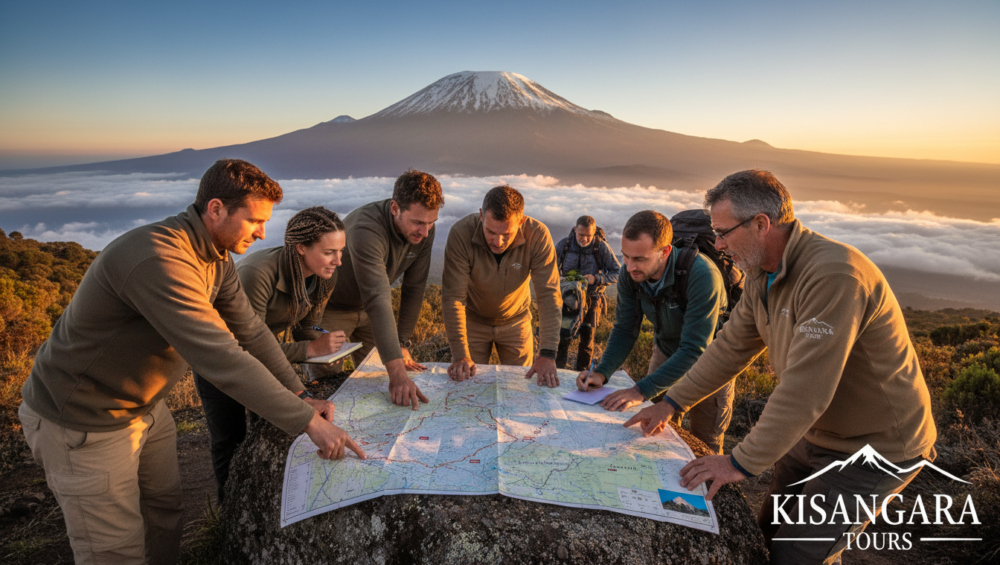
How Many Days to Hike Kilimanjaro: Planning Your Ascent
Before you stands a geographic marvel: Mount Kilimanjaro. Africa’s highest peak pierces the equatorial sky at 5,895 meters. This volcanic giant rises almost 5km from the Tanzanian plains. It is a sight that calls to the explorer within.

The question of time for your climbing Kilimanjaro journey is profound. It is not a simple count of days. It is a meditation on patience and preparation. The mountain rewards those who listen to its ancient rhythm.
We have guided countless souls up these sacred slopes. Our experience teaches a vital truth. Success is woven into the fabric of acclimatization. A minimum of five days is possible, but six to eight offers a far greater chance of standing on the roof of Africa.
This mountain is a world of its own. Each day reveals a new ecosystem, from lush rainforests to alpine deserts. Granting yourself adequate time is the ultimate gift. It allows your body to adapt and your spirit to fully absorb the transformation.
Key Takeaways
- Mount Kilimanjaro is Africa’s tallest peak, standing at 5,895 meters (19,341 feet).
- A successful ascent requires careful planning, with a strong focus on proper acclimatization.
- While a 5-day route exists, a 6 to 8-day itinerary dramatically increases your chance of reaching the summit.
- The journey takes you through multiple, distinct climate zones, from rainforest to arctic summit.
- Respecting the mountain’s altitude and allowing your body time to adjust is the key to a safe and rewarding experience.
- Our expert guides are available to help you plan your transformative adventure.
Introduction to Mount Kilimanjaro Trekking
Kilimanjaro National Park shelters a wonder that defies ordinary description – a mountain that whispers to the soul of every adventurer. This is not merely geography; it is a living testament to Earth’s creative power.

Overview of Tanzania’s Iconic Mountain
Mount Kilimanjaro stands as Africa’s rooftop at 5,895 meters. Volcanic forces sculpted this freestanding giant over millennia. Its snow-capped summit defies equatorial logic.
The journey through Kilimanjaro National Park reveals five distinct climate zones. You traverse from lush rainforest to alpine desert in days. This ecological marvel exists nowhere else on our planet.
| Geological Marvel | Ecological Journey | Accessible Summit |
|---|---|---|
| World’s tallest freestanding mountain | Five climate zones in one ascent | No technical climbing required |
| Ancient volcanic formation | Rainforest to arctic conditions | Guided treks available for all |
| Year-round snow near equator | Unique flora and fauna sightings | Democratic peak achievement |
Why Kilimanjaro Should Be on Your Bucket List
This peak offers what few mountains can: transformation without technical barriers. The reason so many succeed lies in its welcoming nature.
Ordinary people achieve extraordinary feats here. Standing at the top of Africa changes perspective forever. This is the profound reason for its bucket-list status.
We witness daily how this mountain reveals inner strength. Mount Kilimanjaro calls not to conquerors, but to seekers. Answer its call, and discover what awaits within.
Overview of Kilimanjaro Ascent Duration
We have learned Kilimanjaro’s most essential lesson through decades of guiding: patience is the currency that buys summit success. The mountain reveals its truth not in speed, but in gradual adaptation.
Typical Climb Durations and Success Rates
Park data paints a clear picture. Fewer than 30% of five-day climbers reach Uhuru Peak. Each additional day dramatically improves the success rate.

Six-day itineraries see about 45% of climbers succeed. Seven-day climbs achieve a 65% success rate. Those granting themselves eight days or more succeed at rates exceeding 85%.
This progression reveals the mountain’s wisdom. Time allows your body to adapt to thinning air. Rushed attempts often end in disappointment near the summit.
The question becomes one of intention. Are you seeking transformation or checking a box? Longer journeys transform endurance into pilgrimage.
Factors Affecting Climb Success
The mountain reveals its secrets only to those who understand its three fundamental languages. Mastering these elements transforms your ascent from mere endurance into profound communion.
Altitude and Acclimatization Challenges
Altitude is the invisible force that humbles even the strongest athletes. Kilimanjaro’s rapid ascent challenges your body’s capacity for acclimatization in ways few mountains do.
Your body requires time to increase red blood cell production and adjust breathing patterns. Rushing this biological process invites headaches, nausea, and potentially life-threatening conditions.
Weather Conditions and Seasonal Considerations
Choosing the best time for your climb dramatically improves your chance of success. January through March and July through October offer stable conditions.
Weather creates microclimate challenges regardless of season. Expect sub-zero temperatures at altitude year-round, requiring preparation for both tropical heat and arctic cold.

Fitness Level and Preparatory Training
Physical preparation paves the way for summit success. We recommend building cardiovascular endurance through consistent training.
Your chance of reaching the top increases exponentially when physical preparation meets adequate acclimatization time. This is the surest way to honor both mountain and body.
Exploring Popular Kilimanjaro Routes
The choice of route becomes your first conversation with the mountain, setting the rhythm for your entire journey. Each path offers distinct character and philosophy.

Marangu and Machame Route Insights
Marangu, the “Coca-Cola Route,” provides hut accommodation over five to six days. This popular path suffers from crowding but offers comfort.
Machame, known as the “Whiskey Route,” spans six to seven days with superior scenery. Its strategic camp placements follow vital acclimatization principles.
Scenic Alternatives: Lemosho, Shira, Rongai, and Northern Circuit
For those seeking wilderness immersion, Lemosho and Northern Circuit routes dedicate eight to eleven nights to gradual ascent. They traverse Kilimanjaro National Park’s most pristine zones.
Rongai approaches from the north, offering solitude and wildlife encounters. Shira begins at higher elevation, merging with Lemosho after the first day.
| Route | Duration | Accommodation | Success Rate |
|---|---|---|---|
| Marangu | 5-6 days | Huts | 30-50% |
| Machame | 6-7 days | Camping | 65-75% |
| Lemosho | 8-10 days | Camping | 85-90% |
| Northern Circuit | 9-11 days | Camping | 90-95% |
Choosing your route wisely determines the nature of your experience. Our expert guides at Kisangara Tours help you select the perfect path to climb Mount Kilimanjaro.
how many days to hike kilimanjaro
Each additional sunrise on these slopes purchases more than mere time—it grants grace. The question of duration becomes one of intention, revealing whether you seek to conquer or commune.

Comparing 5, 6, 7, and 8+ Day Itineraries
A five-day ascent represents the absolute minimum. Fewer than three in ten climbers reach the summit. The body scrambles to adapt while pushing ever higher.
Six days improves success to 45 percent. Yet this remains a rushed timeline. Most hours are spent hiking 5-7 through changing elevations.
The seven-day journey emerges as the sweet spot. Success rates climb to 65 percent. This schedule allows for proper “climb high, sleep low” acclimatization strategy.
Eight to ten days transform the experience entirely. Success exceeds 85 percent. You move through ecosystems rather than rushing past them.
The final push demands 10-14 continuous hours. But with adequate preparation, you arrive ready. Each extra day purchases reduced suffering and deeper connection.
Planning for Acclimatization and Safety
The mountain’s thin air demands a conversation, not a confrontation. We share its most sacred wisdom: true acclimatization unfolds on biological timelines, respecting neither athletic prowess nor determination.

This vital process begins before your climb mounts the first slope. Spending 2-3 days at mid-altitude locations like Ngorongoro Crater allows your body to start adapting comfortably.
Strategies to Minimize Altitude Sickness
Understanding how long takes your body to adapt reveals why extended journeys succeed. At each new elevation, your system needs 24-48 hours to increase red blood cell production.
“Climb high, sleep low” is the cornerstone of safe ascent.
This strategy trains your body for the extreme altitude of the summit far more effectively than sleeping progressively higher. It is the safest way to prepare.
We guide with constant vigilance, knowing that people of all fitness levels can be affected. Mild symptoms are common, but severe signs require immediate descent.
| Strategy | Benefit | Impact on Summit Success |
|---|---|---|
| Pre-climb Acclimatization | Starts physiological adaptation early | Significantly increases red blood cell production |
| “Climb High, Sleep Low” | Trains body for oxygen deprivation | Dramatically improves altitude tolerance |
| 8+ Day Itineraries | Allows full physiological adaptation | Triples likelihood of reaching the summit |
The long takes approach to your climb mountains journey provides multiple safety layers. It grants adequate time for adaptation and reduces risk, ensuring your summit attempt is both safe and transformative.
Daily Itinerary Insights and Highlights
The rhythm of a seven-day ascent reveals the mountain’s true character. Each camp marks a sacred threshold in your journey upward. We witness how this progression transforms endurance into pilgrimage.

Sample Day-by-Day Breakdown
Our Machame route unfolds like a carefully composed symphony. Each stage builds upon the last, preparing you for the ultimate challenge.
| Day | Elevation Gain | Hours | Key Feature |
|---|---|---|---|
| 1 | 1,830m to 3,000m | 6 | Rainforest immersion |
| 2 | 3,000m to 3,800m | 4-6 | Moorland transition |
| 3 | 3,800m to 3,900m | 7-9 | Lava Tower acclimatization |
| 4 | 3,900m to 4,055m | 4-5 | Barranco Wall scramble |
| 5 | 4,055m to 4,815m | 5 | High desert approach |
| 6 | 4,815m to 5,895m | 12-16 | Summit push to Uhuru Peak |
| 7 | 5,895m to 1,800m | 5 | Jungle descent |
Key Milestones on the Ascent
Certain moments become eternal waypoints. Crossing the Shira Plateau opens you to endless sky. The Great Barranco Wall demands hands and feet working in concert.
Reaching Stella Point at dawn offers premature celebration. The final traverse to Uhuru Peak completes your transformation. Standing at Africa’s highest point rewrites your definition of possible.
Essential Gear, Training, and Preparation
We believe the summit begins long before you set foot on the mountain, in the careful selection of equipment and the dedication of training. This preparation becomes your silent dialogue with the peak, where respect is measured in thoughtful choices.
Gear Checklist for a Successful Trek
Your gear forms a protective shell against Kilimanjaro’s extreme contrasts. From humid rainforests to arctic summit winds, each item serves a vital purpose in your climbing journey.

The mountain demands layers that adapt to sudden changes. Waterproof shells, insulating mid-layers, and broken-in boots become your most trusted companions. Every piece must withstand 50 kilometers of varied terrain.
| Category | Essential Items | Purpose | Notes |
|---|---|---|---|
| Protection | Waterproof jacket/trousers, gloves | Shield from rain and wind | Test waterproofing before your trip |
| Insulation | Down jacket, layered clothing | Combat sub-zero temperatures | Essential for summit night |
| Footwear | Waterproof boots, hiking socks | Support and blister prevention | Break in thoroughly pre-trip |
| Hydration | 2L capacity, energy snacks | Sustain energy at altitude | Critical for summit push |
Our porters carry camp equipment while you manage personal gear. This division honors their strength while keeping your daypack manageable. Understanding this balance respects the mountain family that makes your ascent possible.
Training Tips and Fitness Recommendations
Physical preparation transforms the experience from ordeal to achievement. We recommend building toward five-hour hikes in hilly terrain over several months.
Cardiovascular fitness through running or cycling prepares you for thin air. Practice with your daypack and boots to simulate real conditions. This training builds the endurance needed for the final push to the top.
Our guides bring decades of experience to support your journey. They understand when to encourage and when to caution. This wisdom, combined with proper preparation, creates the ideal conditions for summit success.
Choosing an operator with certified guides and well-treated porters ensures ethical practices. Learn more about our commitment to responsible tourism at Kisangara Tours.
Contact and Booking Information
The path to Africa’s rooftop starts not with footsteps on volcanic soil, but with voices across oceans. Your transformative trip begins when you reach out to our dedicated team.
We stand ready to translate your dreams into reality. Every inquiry receives our full attention and care.

Give Us a Call: +255 755 002 886, +255 783 292 929
Hear the warmth of Tanzanian hospitality in our voices. Our experienced planners understand every trail and strategy for success.
We help you climb Mount Kilimanjaro with confidence. Our certified guides share decades of wisdom earned on these sacred slopes.
Email Us: info@kisangaratours.com, kisangaratours@gmail.com
Share your questions and aspirations through written word. We craft personalized responses that honor your unique journey.
From the starting point of planning to the final climb, we ensure every detail supports your success. Each route is carefully chosen for your fitness level.
“Proper planning transforms ambition into achievement—the mountain rewards those who approach with preparation and respect.”
| Contact Method | Response Time | Best For |
|---|---|---|
| Phone Call | Immediate | Detailed discussions and urgent questions |
| Within 24 hours | Detailed itineraries and documentation | |
| Both Methods | Flexible | Comprehensive planning support |
Reaching the top requires partnership with registered Tanzanian operators. We provide everything from permits to porters, ensuring your safety and comfort throughout the entire experience.
Conclusion
The final truth about Africa’s rooftop emerges from the mountain’s own rhythm—a tempo that honors the body’s need for gradual adaptation. While a five-day climb Kilimanjaro represents the minimum, seven to eight days transforms the journey from gamble to achievable dream.
Mount Kilimanjaro rewards patience and humbles haste. Extra days purchase more than higher success rates—they offer reduced suffering and deeper immersion. This investment separates those who merely touch the summit from those who truly absorb the achievement.
Your chance to stand at this sacred point comes once for most people. Honor it by choosing routes that prioritize gradual ascent. The mountain teaches that adequate time transforms physical endurance into spiritual pilgrimage for all climbers.
FAQ
How long does it take to climb Mount Kilimanjaro?
The time required for a successful climb varies by route, but we strongly recommend a minimum of seven days. This longer duration dramatically increases your chance of reaching Uhuru Peak by allowing your body to properly acclimatize to the high altitude. Shorter five or six-day itineraries have a much lower success rate.
What is the best time of year to plan my ascent?
The clearest weather and best conditions for climbing Kilimanjaro are typically during the dry seasons: from late June to October and from late December to early March. These windows offer the most stable trails and stunning views, though the mountain’s majesty can be experienced year-round with proper preparation.
Which route offers the highest success rate for reaching the summit?
Routes with longer itineraries, like the 8-day Lemosho or the 7-day Machame, consistently boast the highest success rates. The extra days are not about distance, but about acclimatization—giving your body the precious time it needs to adapt to the thinning air, making your final push to the top a safer and more rewarding experience.
How difficult is the climb, and what fitness level is required?
While no technical climbing skills are needed, this is a strenuous high-altitude trek. The challenge lies in endurance and altitude tolerance. We recommend a solid foundation of cardiovascular fitness built through months of consistent hiking, stair climbing, and hill training. The mountain rewards those who come prepared.
What gear is absolutely essential for the trek?
Beyond proper clothing layers, the most critical piece of gear is a high-quality, well-broken-in pair of waterproof hiking boots. Other essentials include a warm sleeping bag rated for sub-zero temperatures, a headlamp for your summit night ascent, and trekking poles to save your knees on the long descent.
What happens if I get altitude sickness during the climb?
Your safety is our paramount concern. Our guides are highly trained in recognizing the symptoms of altitude sickness. The primary strategy is a slow, measured ascent, but if symptoms become severe, the only cure is immediate descent. We have protocols in place for a rapid and safe evacuation from any point on the mountain.