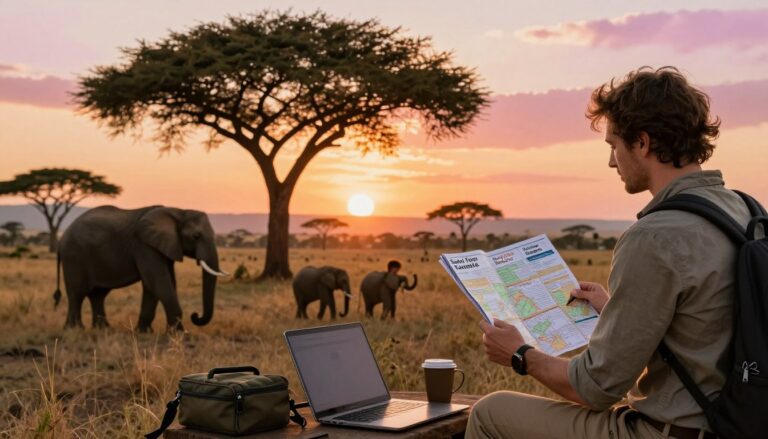
A profound question echoes across the savanna, carried on the wind: are elephants endangered? We stand at a crossroads, witnessing the uncertain future of these ancient giants. Their majestic presence, a timeless thread in the tapestry of the wild, now faces unprecedented challenges.

From Tanzania’s golden plains to Central Africa’s dense forests, these magnificent animals confront mounting pressures. Their numbers have plummeted to alarming lows. Recent data reveals a stark reality: only around 415,000 African elephants remain.
This is a fraction of their historic populations. The truth is sobering and urgent. These intelligent, emotional beings who shape entire ecosystems are slipping away. Human activities, from poaching to habitat loss, drive this decline.
We invite you to understand not just the statistics, but the deeper story. What does it mean for our world if these architects of the landscape disappear? This article unveils the complete picture, from the distinct challenges facing forest and savanna species to the hopeful efforts in conservation.
Key Takeaways
- African elephant populations have experienced severe declines over recent decades.
- There are two distinct African species, each facing a critical conservation status.
- Major threats include illegal poaching for ivory and significant habitat loss.
- Understanding their plight is the first step toward meaningful action and protection.
- Conservation efforts offer a beacon of hope for these iconic animals.
Understanding Elephant Populations in Tanzania and Beyond
In the heart of Tanzania’s wilderness, we witness the intricate dance of elephant demographics across changing territories. These magnificent creatures move through landscapes that have sustained them for countless generations.

Elephant Demographics and Distribution
Across 37 African countries, elephant populations reveal a story of concentration and fragmentation. Southern Africa shelters 70% of the continental population, while Tanzania and East Africa host approximately 20%. This distribution creates vital strongholds for species survival.
The available land for these far-ranging animals has shrunk by more than half since 1979. This compression forces them into smaller wilderness islands, disrupting ancient migration corridors.
| Region | Population Percentage | Key Countries |
|---|---|---|
| Southern Africa | 70% | Botswana, Zimbabwe, Namibia |
| Eastern Africa | 20% | Tanzania, Kenya, Uganda |
| Central Africa | 6% | Gabon, Republic of Congo |
| West Africa | 3% | Burkina Faso, Ghana |
Key Regions and Protected Areas
Tanzania’s protected areas serve as crucial anchors for regional elephant populations. The Selous-Nyerere ecosystem, Ruaha National Park, and Tarangire-Manyara complex support significant breeding groups.
These areas contribute to the broader East African metapopulation across multiple countries. Forest elephants now occupy just a quarter of their historic range, concentrated heavily in Gabon and the Republic of Congo.
Overview of African Elephants: Savanna vs. Forest
Two magnificent forms grace Africa’s landscapes, each shaped by millennia of evolution. We recognize three living elephant species worldwide, but Africa claims two distinct treasures: the African savanna elephant and the African forest elephant. These are not mere variations but separate species with unique evolutionary paths.

Genetic research has confirmed what field observers long suspected. These animals diverged along separate trajectories countless years ago. Their differences extend far beyond appearance to fundamental biological distinctions.
Distinctive Physical Features
The savanna elephant stands as Earth’s largest land animal. Males reach towering heights of three meters and weigh up to six tonnes. Their massive triangular ears function as cooling systems in open habitats.
Forest elephants present a more compact form adapted for dense vegetation. They average two meters tall and weigh two to three tonnes. Their rounded ears and straighter tusks navigate tangled forest undergrowth with precision.
| Feature | Savanna Elephant | Forest Elephant |
|---|---|---|
| Shoulder Height | Up to 3 meters | 2-2.3 meters |
| Weight | Up to 6 tonnes | 1.7-2.3 tonnes |
| Ear Shape | Large, triangular | Small, rounded |
| Tusk Direction | Curved outward | Straight, downward |
Habitat and Range Analysis
Savanna elephants thrive in open country across Eastern and Southern Africa. They inhabit grasslands, deserts, and woodlands where space allows their grand scale. Tanzania’s ecosystems provide ideal conditions for these majestic animals.
Forest elephants dwell in Central Africa’s tropical rainforests. Their range concentrates in the Congo Basin with fragments in West Africa. These habitats demand different survival strategies from their savanna cousins.
Understanding these distinctions is crucial for effective conservation. Each species requires tailored approaches to protection based on their unique ecological roles.
Are Elephants Endangered: Understanding the Threats
A shadow falls across the continent, one cast not by clouds but by human hands. We witness two primary dangers converging: the immediate violence of poaching and the gradual erosion of living space. These forces create a pincer movement that threatens both African species.

Impact of Illegal Wildlife Trade
The illegal wildlife trade represents perhaps the most visceral threat. Despite international bans, demand for ivory continues to fuel a brutal economy. Poaching peaked in 2011 but persists as an existential danger.
We have seen entire family groups decimated for tusks weighing mere kilograms. The social fabric of elephant society tears apart when matriarchs fall. This trade values ivory over life itself.
Effects of Habitat Destruction
Habitat loss constitutes a slower but equally lethal threat. As human populations expand, wilderness shrinks relentlessly. These wide-ranging animals find themselves trapped in shrinking pockets.
Ancient migration corridors sever under roads and railways. Seasonal ranges become inaccessible behind fences. Infrastructure development fragments the landscape in catastrophic ways.
These threats amplify one another’s impacts. Understanding this full spectrum is essential for meaningful protection. The battle must be fought on multiple fronts simultaneously.
Human-Elephant Conflict and Community Impact
At the boundary between cultivated fields and wild landscapes, human and elephant worlds collide with profound consequences. We witness the daily tension where ancient migration routes intersect with modern livelihoods.
This delicate dance between survival and coexistence defines life for communities sharing space with these magnificent animals. The relationship carries both cultural reverence and practical challenges.
Local Livelihoods and Cultural Significance
For people living near protected areas, a single night’s raid can destroy a season’s food security. These elephants transform from cultural icons into immediate threats to survival.
Yet tourism revenue creates powerful incentives for conservation. When communities benefit from living elephants, they become their strongest protectors.
Innovative solutions like solar-powered fences demonstrate how technology can safeguard both people and wildlife. These approaches honor the shared habitat that sustains all life.
The cultural significance of these great animals runs deep in local traditions. Balancing this reverence with practical coexistence remains our greatest challenge and opportunity.
Conservation Efforts: Successes and Ongoing Challenges
We stand witness to remarkable conservation victories that rewrite the narrative of decline. Across Africa, dedicated conservation efforts are creating sanctuaries where ancient rhythms can continue.

Protected Areas and Conservation Policies
The Kavango-Zambezi Transfrontier Conservation Area spans five nations, sheltering the continent’s largest savanna elephant population. Here, numbers have remained stable through decades of sustained protection.
In Central Africa’s rainforests, well-managed conservation areas in Gabon and Congo demonstrate what’s possible. Forest elephants find stability where national commitment meets adequate enforcement.
Yet challenges persist like shadows at dusk. Insufficient funding, political instability, and persistent ivory demand threaten these hard-won gains. Our conservation work requires constant vigilance.
True success demands holistic approaches that blend strong protection with community partnership. When populations recover and coexistence thrives, we see the blueprint for scaling these efforts continent-wide.
Innovative Measures and Technological Advances in Monitoring
A new dawn breaks over conservation, illuminated by the glow of satellite signals and the dedication of local guardians. We witness a profound shift in how we protect these magnificent creatures.

Technology transforms our understanding of elephant movements. GPS collars act as electronic sentinels, mapping ancient migration routes with precision. This data reveals critical corridors between protected areas.
GPS Tracking and Survey Techniques
Advanced survey methods paint detailed pictures of population dynamics. Aerial surveys cover vast landscapes while dung DNA analysis identifies individual animals. Each technique contributes unique insights.
Real-time tracking alerts rangers to potential conflicts. When these great animals approach farmlands, rapid response teams can prevent damage. This proactive approach represents a major development in coexistence strategies.
Community Ranger Training Initiatives
Local communities become conservation’s frontline through comprehensive training programs. Rangers learn sophisticated monitoring techniques and conflict resolution skills. Their intimate knowledge of the land proves invaluable.
Training extends to crime scene investigation and habitat assessment. These initiatives build sustainable protection capacity within local populations. The approach honors traditional wisdom while embracing modern technology.
This fusion of ancient knowledge and innovation creates resilient conservation models. Together, we’re writing a new chapter in wildlife protection across Tanzania’s magnificent ranges.
The Role of Poaching and Infrastructure Development
A double-edged sword of progress cuts through ancient elephant corridors. We witness two relentless forces converging upon these gentle giants.

The illegal wildlife trade operates with chilling efficiency. Organized networks move ivory from killing fields to distant markets. Each tusk represents a family torn apart.
Infrastructure development creates more insidious threats. Roads and railways fragment ancestral habitats. These projects open remote areas to new dangers.
“Wildlife crime remains a low-risk, high-reward enterprise that fuels corruption and undermines governance.”
The intersection of these threats creates compound impacts. A new road brings economic opportunity but also poacher access. Each development project carries hidden ecological costs.
| Threat Type | Immediate Impact | Long-Term Consequence |
|---|---|---|
| Poaching | Direct population loss | Social structure collapse |
| Road Development | Habitat fragmentation | Migration route severance |
| Agricultural Expansion | Food source reduction | Human-wildlife conflict increase |
Solutions require balancing protection with progress. Wildlife corridors can be integrated into development plans. Anti-poaching efforts must adapt to changing landscapes.
We believe in conservation-conscious development that honors both human needs and wildlife survival. The future of these magnificent creatures depends on this delicate balance.
Comparative Analysis: African Savanna and Forest Elephant Trends
In the grand narrative of African wildlife, forest and savanna elephants chart separate destinies. Their conservation stories unfold along dramatically different timelines and trajectories.
The numbers reveal a stark contrast. African forest elephants have suffered catastrophic losses—more than 86% over just 31 years. Meanwhile, savanna elephant populations declined by at least 60% across five decades.

This differential decline reflects their distinct ecological challenges. Forest elephants navigate dense rainforests where protection proves difficult. Savanna elephants benefit from more visible habitats and established conservation networks.
| Metric | Forest Elephants | Savanna Elephants | Conservation Implication |
|---|---|---|---|
| Population Decline | 86% (31 years) | 60% (50 years) | Urgent vs. sustained intervention needed |
| IUCN Status | Critically Endangered | Endangered | Different conservation priorities |
| Range Occupancy | 25% of historic range | Variable across regions | Habitat fragmentation severity |
| Success Stories | Gabon & Congo stability | Kavango-Zambezi growth | Proof effective models exist |
Understanding these contrasting trends guides conservation strategy. Each species demands tailored approaches based on their unique ecological contexts and threats.
Elephant Conservation in the IUCN Red List and Global Frameworks
In the meticulous pages of international conservation records, we find the sobering reality of elephant species etched in data and urgency. The IUCN Red List stands as the world’s most comprehensive inventory, maintained by thousands of expert scientists.

A historic 2021 decision transformed our understanding. Genetic research confirmed African forest and savanna elephants as distinct species. This separation on the Red List demands tailored conservation approaches for each unique animal.
The assessments reveal a stark divide. Forest elephants face critically endangered status after 86% population decline. Savanna cousins are endangered, with numbers dropping 60% over fifty years.
| IUCN Category | Extinction Risk Level | Conservation Priority |
|---|---|---|
| Critically Endangered | Extremely High | Maximum Urgency |
| Endangered | Very High | High Priority |
| Vulnerable | High | Active Protection |
| Near Threatened | Moderate | Monitoring Required |
These IUCN Red List designations carry real weight. They guide international funding and shape protective policies across borders. The assessment methodology draws from decades of field data.
For conservationists, the Red List provides both warning and roadmap. It quantifies decline with scientific precision while highlighting where protection succeeds. This global framework offers our best hope against extinction.
How You Can Get Involved and Support Elephant Protection
Your journey into the heart of Africa can become a lifeline for its most majestic inhabitants. We believe conservation is not a spectator sport but a shared responsibility that welcomes every caring soul.

Supporting reputable organizations multiplies your impact dramatically. Donations fund ranger patrols, community programs, and vital research. Each contribution directly enhances protection efforts where they matter most.
Choose responsible wildlife tourism that benefits local communities. When you travel with operators who prioritize conservation, you create economic incentives for protection. Living elephants generate far more value than ivory ever could.
Even from home, your choices matter. Reject ivory products and support companies with strong environmental policies. Share knowledge about these magnificent animals’ endangered status.
- Financial support funds GPS collars and ranger training
- Responsible tourism demonstrates the value of living wildlife
- Consumer choices reduce demand for harmful products
- Advocacy builds political will for stronger protections
This is your invitation to participate in something larger than yourself. Together, we can ensure future generations inherit a world still graced by these ancient beings.
Contact Us for More Information and Assistance
The journey from concern to meaningful action begins with a simple conversation. We invite you to start that dialogue with us today. Our team bridges international passion with local conservation reality.
Your questions about these magnificent animals deserve thoughtful, experienced answers. We offer insights born from years living alongside Tanzania’s wildlife.
Give Us a Call
Reach us at +255 755 002 886 or +255 783 292 929. Our guides discuss safari opportunities in Tanzania’s premier wildlife areas. We design experiences aligning with your conservation values.
Email Us
Contact info@kisangaratours.com or kisangaratours@gmail.com. We respond to all inquiries with care reflecting our commitment to hospitality and conservation.
| Engagement Level | Contact Method | Response Time |
|---|---|---|
| General Questions | Within 24 hours | |
| Safari Planning | Phone Call | Immediate discussion |
| Conservation Partnerships | Email & Follow-up Call | Comprehensive response within 48 hours |
We serve as bridges between global advocates and Tanzania’s conservation reality. Your curiosity transforms into practical support through our guidance.
Conclusion
Across the vast African horizon, a delicate balance hangs between ancient rhythms and modern pressures. The truth about these magnificent animals is sobering yet filled with possibility. Both African elephants face critical challenges in their remaining habitats.
The forest elephant survives in scattered forests, its population reduced by devastating losses. Meanwhile, savanna elephants navigate shrinking grasslands. Each species requires tailored protection strategies.
Yet hope persists where committed conservation efforts thrive. The future of these iconic creatures depends on choices we make today. Will we value living wild majesty over short-term gain?
Our collective action can ensure these gentle giants continue shaping African landscapes. They remain vital architects of the ecosystems they inhabit. Their survival represents our commitment to preserving Earth’s natural wonders.
FAQ
What is the current conservation status of African elephants?
What are the primary threats driving these species toward extinction?
How does habitat destruction specifically impact elephant herds?
What conservation efforts are proving successful in Tanzania?
What is the difference between savanna and forest elephant species?
How can travelers responsibly experience elephants in the wild?

Frida Cliff
Farida Clif is the founder of Kisangara Tours and a seasoned safari expert with years of experience in Tanzania’s travel industry. She is dedicated to crafting authentic safari experiences that highlight the country’s wildlife, culture, and natural beauty.