A safari company should be defined by its guides — not its marketing.
Why KisangaraAfrica’s largest protected ecosystem — at 5% of the visitor density.
Southern CircuitTanzania combines Africa's greatest wildlife with some of the world's finest beaches — in the same country, in the same journey.
Tanzania combines Africa's greatest wildlife with some of the world's finest beaches. The northern circuit safari followed by Zanzibar is the most popular Kisangara combination.
The transition from the open savanna to the Indian Ocean — both in the same country, in the same journey — is unique to Tanzania. No other destination on Earth combines these two experiences in such close proximity.
Zanzibar · Nungwi Beach
A thousand-year-old UNESCO World Heritage trading city (Stone Town) and the Indian Ocean's finest beaches. 25-minute flight from Dar es Salaam.
Wall dives to 800 metres, hammerhead sharks, manta rays year-round. Africa's least-visited island — extraordinary conditions.
The Indian Ocean's finest whale shark concentration. Pristine coral reef. Marine turtle nesting beaches. Marine Park.
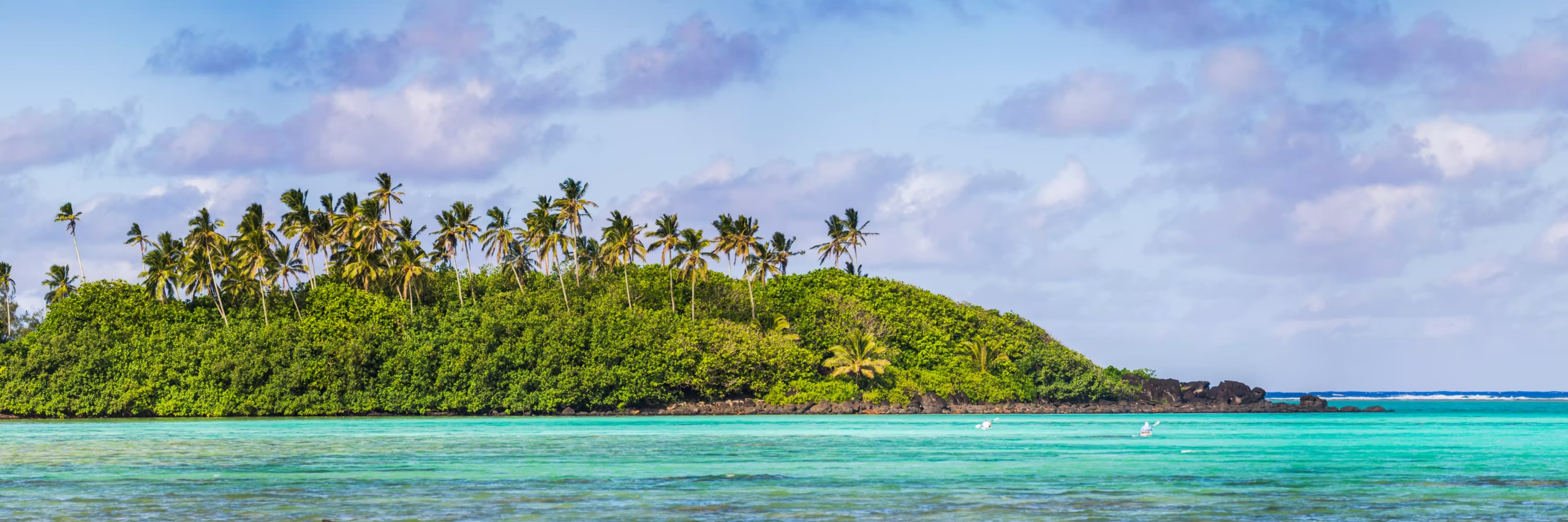
The combination of a Tanzania safari and an Indian Ocean beach extension is one of the great travel sequences. Four days in the Serengeti — dust, heat, the sounds of Africa — and then a single domestic flight to an island where the water is warm and turquoise, the sand is coral white, and the pace is completely different. The contrast is the point.
Tanzania sits on the Indian Ocean coast with three major island options: Zanzibar, the largest and most visited, with Stone Town UNESCO architecture and the full range of accommodation from boutique historic hotels to beach resorts; Pemba, quieter and more remote, known for world-class diving and the dhow-building tradition; and Mafia Island, the most pristine, with the Mafia Island Marine Park — one of the best marine turtle nesting sites in the western Indian Ocean and exceptional reef diving.
Stone Town, the historic centre of Zanzibar City, is a UNESCO World Heritage Site and one of the great surviving examples of Swahili-Arab-Portuguese architecture. The narrow streets are a labyrinth of carved doors, Arabic courtyards, and spice-scented markets. The history is layered and complex — Zanzibar was the centre of the Arab slave trade in East Africa and the birthplace of Freddie Mercury. A single afternoon in Stone Town requires three days to understand. A guided walk through the Old Fort, the Darajani Market, and the shorefront is essential.
Kisangara arranges the complete safari-plus-beach itinerary as a single booking: domestic flights between the mainland and the island, transfers, accommodation at carefully selected properties, and any island activities — spice farm tour, reef diving, snorkelling excursion, dhow sunset cruise — as part of a unified programme. Guests deal with a single point of contact and a single itinerary document for the entire trip.
Zanzibar is the default island extension for Tanzania safaris — and with good reason. Stone Town UNESCO heritage, Jozani Forest red colobus monkeys, excellent snorkelling and diving on the reef system, a full range of accommodation from boutique Stone Town hotels to beach resorts, and a lively local culture that rewards exploration. The north coast (Nungwi, Kendwa) has the most consistent beach conditions year-round. The east coast (Paje) is the kitesurfing centre. The south coast is quieter and more local in character.
Pemba is forty kilometres north of Zanzibar and receives a fraction of the visitor numbers. The island is characterised by dense forest, dhow-building villages, and steep underwater walls that attract serious divers from around the world. The Pemba Channel is considered one of the premier advanced diving destinations in the Indian Ocean — strong currents, exceptional visibility, and large pelagic species including hammerhead sharks and whale sharks seasonally. Accommodation is limited and deliberately low-key. Recommended for travellers who want maximum seclusion and exceptional underwater access.
Mafia Island Marine Park is one of the largest and most biodiverse marine protected areas in the western Indian Ocean. The park encompasses coral reefs, seagrass beds, and mangrove channels that support whale sharks (November–February), sea turtles, and an extraordinary diversity of reef fish. The island is small, quiet, and almost entirely tourism-free outside the marine park visitors. For guests who want the best possible diving or snorkelling experience combined with almost complete solitude, Mafia is the recommendation.
The combination works best when the safari and the island are designed as a single trip — not a safari with a hotel booking added. These are the key planning considerations.