Ngorongoro Crater.
~25,000 animals on the floor. Big Five present. Exceptional predator density in a natural arena.
A world within
a world.
The Ngorongoro Crater is among the world’s largest intact volcanic calderas — roughly 600 metres deep and 260 square kilometres on the floor. Inside, a complete African ecosystem exists in miniature: savanna, forest, swamp, and a soda lake, populated by about 25,000 animals who rarely leave. It is one of the densest wildlife arenas in Africa.
The caldera formed millions of years ago when a massive volcano erupted and collapsed inward. The basin filled with sediment and vegetation, attracting wildlife that became semi-resident. Today the crater walls form a natural enclosure for most species, creating concentrations of lion, elephant, buffalo, hyena, wildebeest, zebra, eland, and black rhinoceros that open savanna rarely matches.
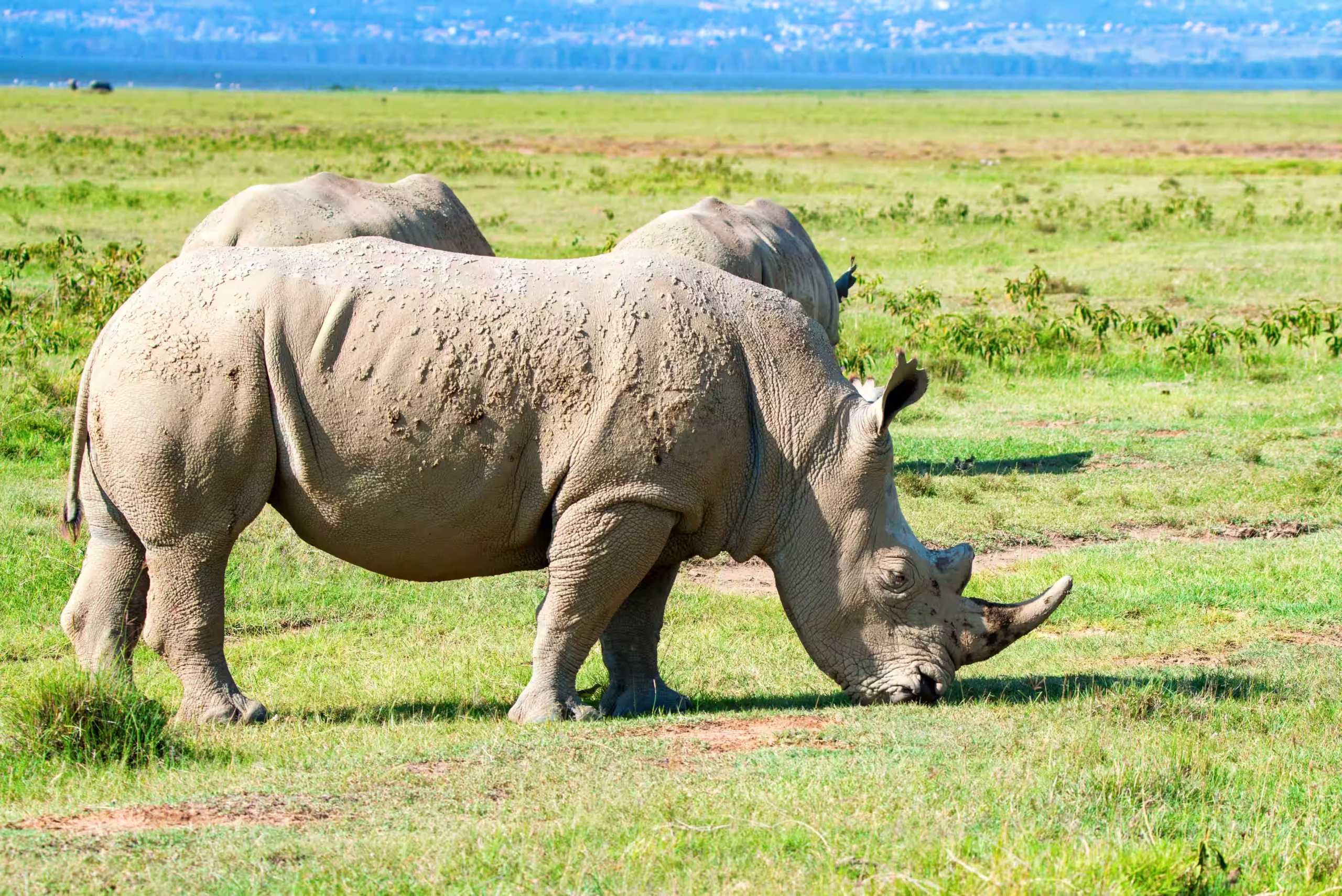
A viable population of black rhinoceros lives on the crater floor — among the last in East Africa. Enclosed habitat, permanent water, and intensive anti-poaching presence make this one of the safer rhino environments on the continent. Our guides work individual identification and locate rhino whenever conditions allow on a full crater day. An encounter with a wild black rhino at close range remains one of Africa’s most significant wildlife experiences.
The broader Ngorongoro Conservation Area holds Olduvai Gorge, where Mary Leakey’s 1959 discoveries helped rewrite human evolutionary history. The gorge cuts through deep sedimentary strata in a single exposed cross-section. We build Olduvai into full-day crater programmes whenever timing allows — a visit that skips it feels geologically and historically incomplete.
The complete
resident roster.
Black rhinoceros
Black rhino inhabit the crater floor — critically endangered globally. The crater’s enclosed nature and permanent anti-poaching presence make this one of the safer rhino habitats in Africa. Guides locate them using dung, tracks, and individual ear-notch recognition whenever a full day allows.
Lion — resident prides
Ngorongoro holds exceptional lion density — roughly several dozen individuals across resident prides. Enclosed gene pool and moist crater conditions help produce the distinctive dark-maned males associated with the crater. A full crater day produces lion sightings on the large majority of visits.
Hippo & flamingo
Lake Magadi supports flamingo colonies that shift as birds feed. The Mandusi hippo pool holds a permanent pod that can be approached on foot with a ranger when arranged. Dawn at the flamingo lake — pink birds on dark water, steam rising, crater walls framing everything — is one of Africa’s great photographic moments.
Olduvai Gorge
About forty kilometres from the crater rim, Olduvai Gorge cuts through deep sedimentary deposits. Mary Leakey’s 1959 discoveries here reshaped human evolutionary history. The gorge museum explains the stratigraphy; a guided walk sits inside our full-day Ngorongoro programmes when timing allows.
How to get the
most from the crater.
Most visitors spend four to six hours in the crater. We recommend a full day when possible. The difference is often a rhino encounter, longer predator time, and golden-hour light on the walls at ascent.
One full day.
Done properly.
Tell us your Northern Circuit dates and whether you want one or two crater nights. We’ll shape rim lodge, descent timing, and Olduvai into one clear outline.
Enquire now